How to Meal Prep for the Week: What to Cook to Save Time Every Day
By:Author:GLP Diet Editorial
Updated on:October 17, 2026
- The Myth That Meal Prep Fixes Your Week Overnight
- How Batch Cooking Actually Saves You Time
- What Changes How Well Your Meal Prep Holds Up
- A Week of Meal Prep You Can Copy Exactly
- Fitting Meal Prep Around a Full-Time Week
- When Meal Prep Starts to Feel Automatic
- Where Meal Prep Plans Usually Go Wrong
- Making Weekly Meal Prep Easier With GLP Diet
- Turning One Sunday Session Into a Calmer Week
Meal prepping for the week means cooking your main components in one or two sessions so daily decisions shrink to reheating and plating. It works because it removes the moment of choice that usually ends in whatever's fastest, not whatever's planned.
The mechanism is simple: decision fatigue builds across a day, and by dinner most people default to convenience. Pre-cooked food removes that fork in the road before it shows up.
This guide covers what meal prep can't do, how the batching actually works, what changes the result, a sample week you can copy, and where most people quietly give it up.
The Myth That Meal Prep Fixes Your Week Overnight
Meal prep does not magically fix a chaotic week, and it won't melt weight from any one part of the body no matter what you cook. The body draws energy from stores across the whole body, not from wherever you'd like it to come from first.
What meal prep actually does is remove friction. It makes the easy choice the planned choice, so the days you'd normally skip a proper meal or grab something quick get covered by food you already made.
That's the honest version: it's a logistics tool, not a shortcut. The result still comes from what and how much you eat across the week, meal prep just makes that easier to control.
How Batch Cooking Actually Saves You Time
Meal prep works through two separate mechanics: cooking in bulk once, and assembling in different combinations later. Each solves a different part of the problem.
Cooking Once Instead of Five Times
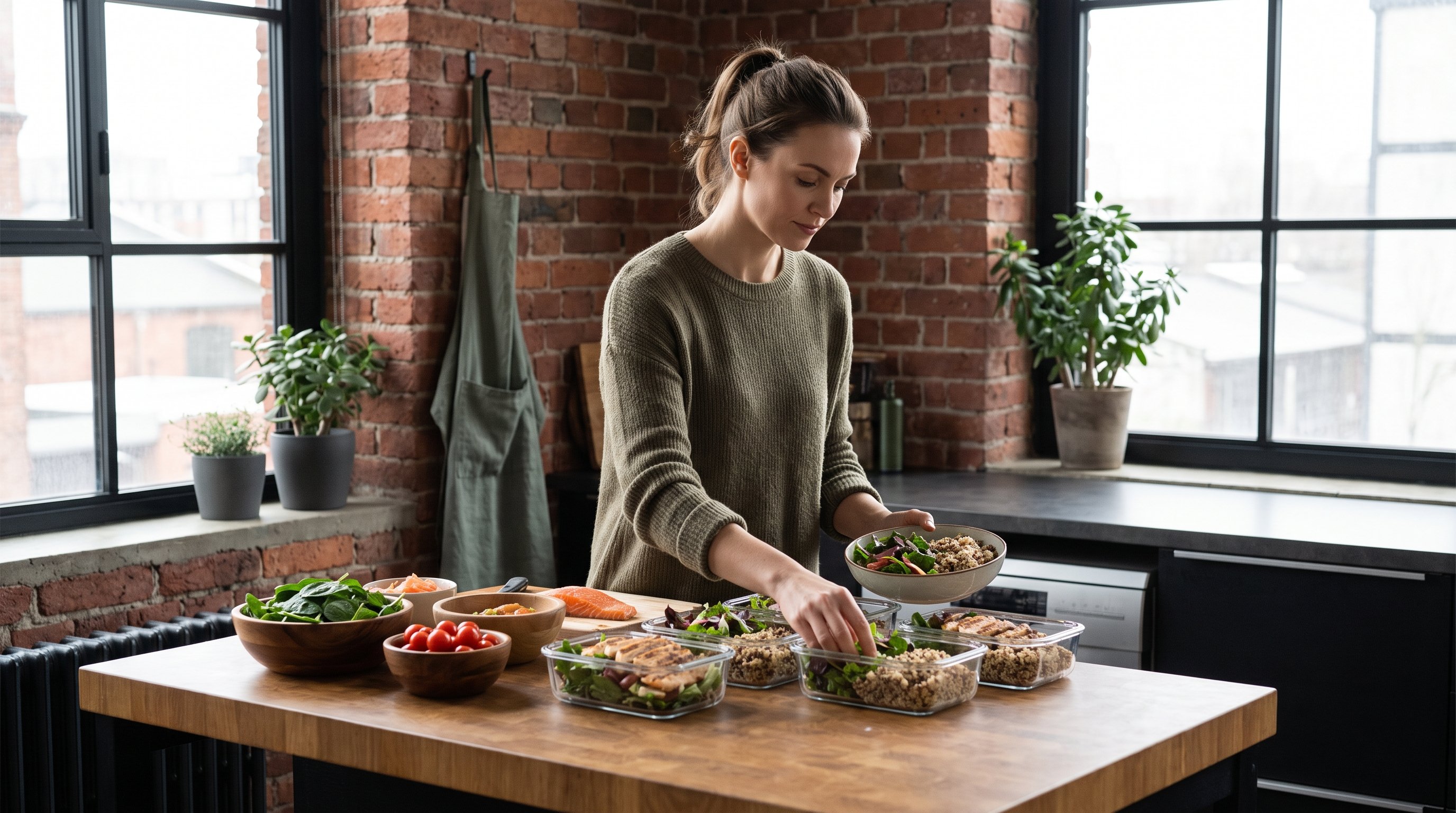
One session of roasting, grilling or simmering uses the same oven, pan and clean-up for a week's worth of food instead of five separate ones. The time saved isn't in the cooking itself, it's in the setup, the shopping trip, and the washing up you only do once.
Mixing and Matching Instead of Repeating
Cooking components separately, like a grain, a protein and a vegetable, lets you combine them differently each day so the week doesn't taste identical. That variation is what keeps people eating the prepped food instead of abandoning it by Wednesday.
What Changes How Well Your Meal Prep Holds Up
Not every batch-cooked container survives the week in good shape. Three things decide whether your prep gets eaten or thrown out.
What Determines Whether Meal Prep Actually Gets Eaten
- Component cooking over full meals - cooking a protein, a carb and a vegetable separately gives you more combinations than sealing five identical meals, so you're less likely to get bored and skip it
- Storage that matches the food - some things reheat well and some go soggy or rubbery, so sauces, dressings and anything crisp are best kept separate until serving
- A realistic portion count - prepping seven days of food when you only eat five lunches at home means two containers go to waste, so count actual meals, not calendar days
A Week of Meal Prep You Can Copy Exactly
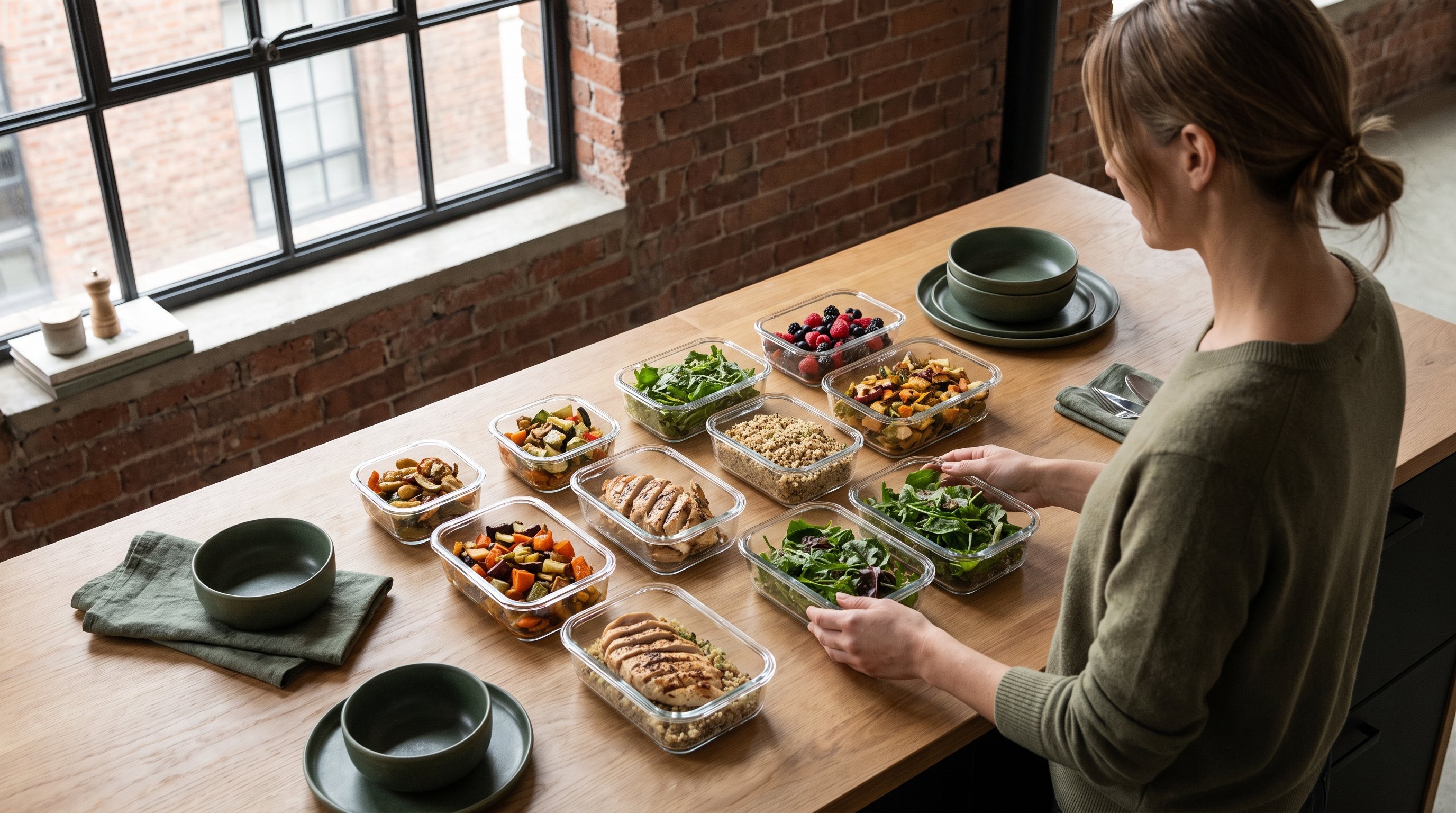
Here's a straightforward structure built around one cooking session and a handful of base components you rotate across the week.
A Simple Weekly Prep Session
- Pick two proteins - something like roasted chicken thighs and a batch of lentils or beans covers both meat and plant-based days
- Roast one tray of vegetables - a mix of whatever's in season, roasted together on one tray while the protein cooks
- Cook one base carb - rice, quinoa or potatoes made in bulk, enough for lunches and dinners across the week
- Pre-chop raw extras - cucumber, peppers or leafy greens chopped and stored dry so salads take two minutes to assemble
- Make one sauce or dressing - a single dressing stored separately that works across three or four different combinations
Fitting Meal Prep Around a Full-Time Week
Most people don't fail at meal prep because the cooking is hard, they fail because the plan doesn't match their actual week. A two-hour Sunday session only helps if Sunday is genuinely free, so some people split it into two shorter sessions instead.
This is where having a plan built around food you'll actually eat matters more than having a perfect one. GLP Diet includes a tailored-for-you meal plan that works with the ingredients and routine you've already got, so the prep fits around your week instead of the other way round.
Pairing that with the app's progress tracking means you can see water, weight and steps in one place alongside what you're eating, rather than juggling a notebook and a fridge full of containers separately.
When Meal Prep Starts to Feel Automatic
The first week or two of meal prep usually feels like extra work, because you're learning which containers you actually need and how long components realistically last. That adjustment period is normal and it passes once you've settled on a routine.
Most of the drop-off happens around week three or four, usually because the food gets repetitive or the Sunday session gets skipped once and never comes back. Keeping the base components flexible, so you can swap a sauce or a vegetable without changing the whole plan, is what carries people past that point.
Where Meal Prep Plans Usually Go Wrong
Cooking Five Identical Meals
Sealing the exact same plate into five containers is the fastest route to boredom and wasted food. Cook components instead of finished meals so you can vary the combination each day without extra effort.
Storing Everything Together
Mixing a dressing or sauce into a container before the week starts turns crisp vegetables soggy by day three. Keep wet and dry elements separate and combine them only when you're about to eat.

Prepping More Than You'll Actually Eat
Cooking seven days of food for a week where you'll eat out twice means food gets binned and the whole effort feels wasted. Count your real meals for the week before you start chopping.
Ignoring How Long Food Actually Keeps
Some proteins and grains hold up fine for five days, others start to turn by day three. Cook the shorter-life items in smaller batches partway through the week instead of all at once.
Making Weekly Meal Prep Easier With GLP Diet
Meal prep gets easier once the planning part stops being a guessing game. Instead of working out portions, ingredients and combinations from scratch every Sunday, a tailored meal plan does that groundwork for you.
GLP Diet builds a plan around what you already like to eat, so your prep list is based on real meals you'll finish, not a generic template you'll abandon by Thursday. Add in the light exercise sessions and the progress trackers for water, steps and weight, and the eating side of your week stops being the thing you have to think hardest about.
Control Your Appetite
Smarter Weight Loss Plan
Turning One Sunday Session Into a Calmer Week
Meal prep isn't about perfection, it's about removing one decision point from every single day so the plan holds even when the week gets busy. Pick one cooking session, a handful of components, and start smaller than you think you need to.
If the planning part is what keeps stalling you before you even get to the kitchen, GLP Diet can take that piece off your plate with a meal plan built around food you'll actually want to eat.
FAQ
Meal prep doesn't lose weight by itself, it just makes it easier to stick to a deficit because the planned food is ready instead of competing with a convenience option. The actual result still comes down to what and how much is in those containers.
Only if you cook finished meals instead of components. Batching a protein, a carb, a vegetable and a sauce separately lets you combine them differently each day, so the week doesn't taste repetitive.
Split the session into two shorter ones, like chopping vegetables one evening and cooking proteins the next, rather than forcing a single long block into a week that doesn't have one. A tailored plan, like the one inside GLP Diet, can also build around smaller pockets of time instead of assuming a free Sunday.
Most people quit because the food gets repetitive or one skipped session snowballs into stopping altogether. Keeping the base components flexible, so swapping a sauce or vegetable doesn't mean redoing the whole plan, is usually what keeps it going past that point.
Share this post