Foods High in Magnesium: Why Whole Foods Beat Everyday Supplements
By:Author:GLP Diet Editorial
Updated on:October 17, 2026
- What a Magnesium-Rich Day Actually Looks Like
- How Much Magnesium You Actually Need Each Day
- Why Whole Food Sources Beat a Daily Pill
- Fitting Magnesium-Rich Foods Into a Normal Week
- Who Needs to Pay Closer Attention to Magnesium Intake
- When Eating More Magnesium Starts to Feel Normal
- Making Magnesium-Rich Eating Easier With GLP Diet
- Building a Plate That Naturally Covers Magnesium
Foods high in magnesium include leafy greens, nuts, seeds, beans and whole grains, and eating a mix of these most days covers what your body needs without a supplement bottle in sight.
Magnesium sits inside plant cell structures and animal tissue, so whole foods carry it alongside fibre, potassium and plant compounds that work together rather than in isolation.
This guide covers what a magnesium-rich day actually looks like, how much you need, why food tends to beat a daily capsule for sticking with it long term, and how to fit it into a normal week.
What a Magnesium-Rich Day Actually Looks Like
You don't need a special shopping list to hit a solid magnesium intake. A normal day with a handful of swaps does the job.
A Sample Day Built Around Magnesium
- Breakfast - porridge made with oats, topped with a spoon of pumpkin seeds and a sliced banana
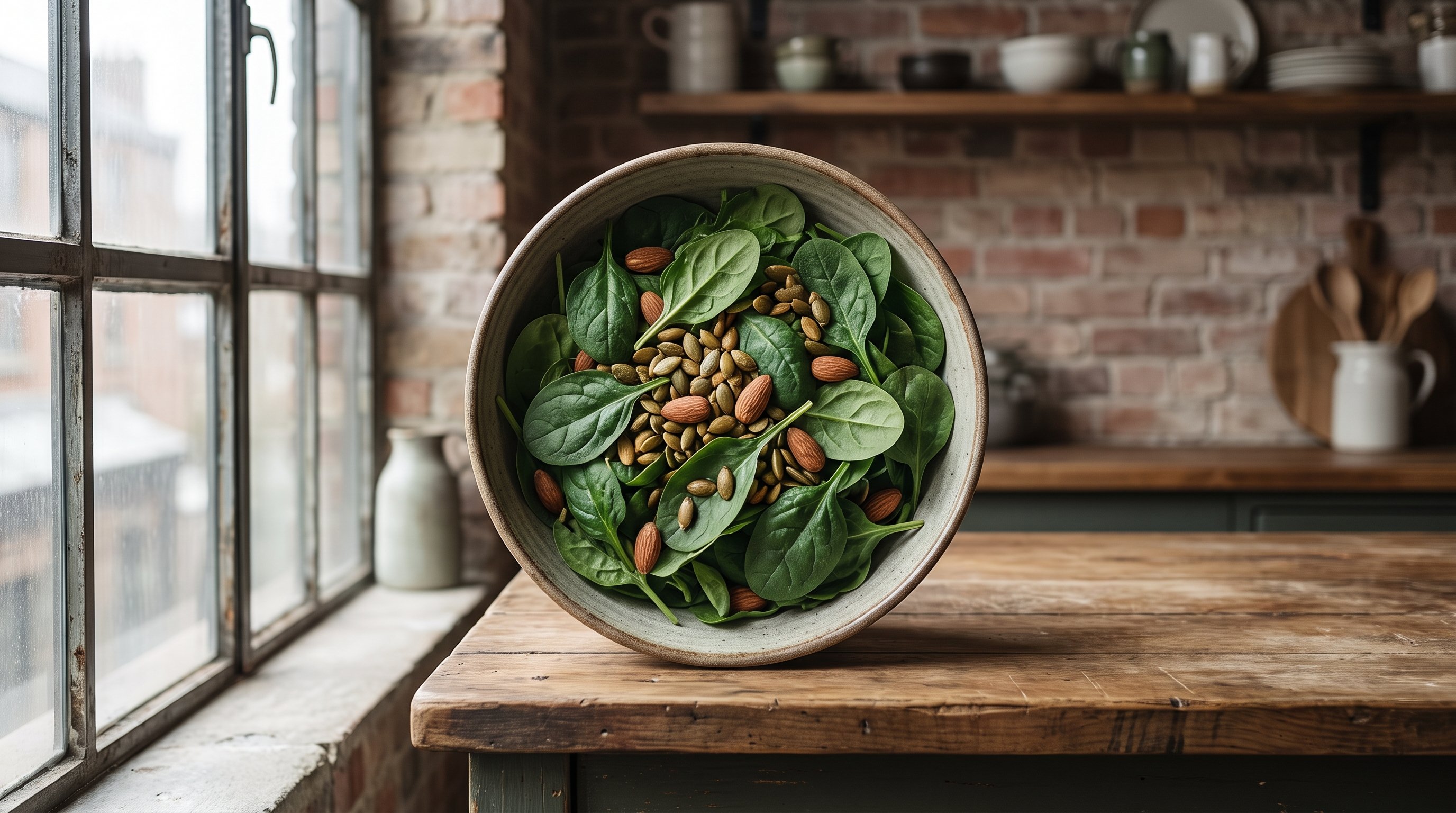
- Lunch - a big spinach salad with chickpeas, avocado and a handful of almonds
- Snack - a small handful of mixed nuts or a square of dark chocolate
- Dinner - grilled fish or tofu with brown rice and steamed edamame or black beans
- Evening - a square of dark chocolate or a cup of warm milk, whichever you fancy
None of this needs to be exact. Swap spinach for kale, almonds for cashews, brown rice for quinoa, and the magnesium total barely moves.
How Much Magnesium You Actually Need Each Day
Matching Portions to Daily Intake
Rather than counting milligrams at every meal, think in terms of portions across the day - a handful of nuts here, a cup of greens there, a serving of beans at dinner.

Spreading magnesium-rich foods across breakfast, lunch and dinner makes it easier to hit a solid daily total than trying to cram it all into one meal.
| Food | Portion | Best Time |
|---|---|---|
| Pumpkin seeds | 30g handful | Breakfast or snack |
| Spinach | 1 cup cooked | Lunch or dinner |
| Almonds | 30g handful | Snack |
| Black beans | 1/2 cup | Lunch or dinner |
| Dark chocolate | 1-2 squares | Evening treat |
Why Whole Food Sources Beat a Daily Pill
A magnesium supplement delivers one isolated mineral and nothing else - it's a pill you have to remember, on top of everything else you already track.
A handful of almonds or a bowl of lentil soup delivers magnesium plus fibre, protein and other nutrients your body uses at the same time, and it's something you were probably going to eat anyway.

The harder route is remembering a supplement every single day for months on end with nothing to show for a missed dose except guilt.
The easier route is building meals you already enjoy around a few magnesium-rich staples, so the habit holds itself up without extra willpower.
Fitting Magnesium-Rich Foods Into a Normal Week
Most people don't fail at eating more magnesium because the foods are hard to find - they fail because nobody plans for them in a normal, busy week.
Keeping a bag of mixed nuts at your desk, a tub of hummus in the fridge, and frozen spinach in the freezer means the magnesium-rich option is also the convenient one.
This is where a meal plan built around food you already like makes a real difference - GLP Diet maps out meals that naturally include these foods, so you're not hunting for magnesium sources on top of everything else you're managing.
Keeping water intake, steps and meals in one place also means you can see the whole picture of your day instead of trying to hold it all in your head.
Who Needs to Pay Closer Attention to Magnesium Intake
If You're New to Cooking From Scratch
Start with the easiest swaps - add a handful of nuts to your usual snack, swap white rice for brown rice once a week.
If You're Busy and Eating on the Go
Pre-portioned nuts, a banana, and a tub of edamame travel well and don't need a kitchen to eat.
If You're Following a Smaller Appetite
Choose the densest options first - a tablespoon of nut butter or a small handful of pumpkin seeds packs more magnesium per bite than a large bowl of lettuce.
If You're Cooking for a Family
Black beans and spinach blend easily into dishes everyone already eats, like chilli or pasta sauce, without anyone noticing the swap.
When Eating More Magnesium Starts to Feel Normal
There's no fixed point where this clicks, and it's worth not expecting one.
For most people, the shift happens quietly - a few weeks in, nuts and leafy greens stop feeling like an add-on and start feeling like part of how you eat.
The spot where people usually drop off is the first couple of weeks, when the new foods still feel like effort rather than habit - stocking your kitchen ahead of time helps carry you past that stretch.
Making Magnesium-Rich Eating Easier With GLP Diet
Building a magnesium-rich plate isn't complicated, but fitting it into a week that already has a job, meals to cook and everything else going on is the real challenge.
GLP Diet pulls this together with a meal plan built around food you already like, light exercise sessions you can do at home, and trackers for water, steps and weight so you can see your whole routine in one place instead of juggling it in your head.
Control Your Appetite
Smarter Weight Loss Plan
Building a Plate That Naturally Covers Magnesium
You don't need to overhaul your diet to eat more magnesium - a few swaps at meals you already have, repeated most days, gets you there.
Start with one change this week, like adding a handful of nuts to breakfast or swapping white rice for brown, and let GLP Diet help turn it into a plan that fits the rest of your routine.
FAQ
Pumpkin seeds, almonds, spinach, black beans and dark chocolate are among the richest everyday sources. Whole grains like brown rice and quinoa add a steady amount too.
A supplement delivers magnesium alone, while whole foods bring it alongside fibre and other nutrients your body uses at the same time. Food is also something you're already eating, which makes it easier to keep up than remembering a separate pill.
Leafy greens are one route to magnesium, not the only one - nuts, seeds, beans and whole grains all count. Build around what you actually enjoy eating rather than forcing down a food you don't like.
Keep magnesium-rich staples like nuts, frozen spinach and tinned beans stocked so they're never the hard option. GLP Diet can also build these foods into a meal plan for you, so you're not deciding from scratch every day.
Share this post