Protein Rich Meals: Why Protein-Forward Plates Beat Diet Cuts
By:Author:GLP Diet Editorial
Updated on:October 17, 2026
- Do Protein Rich Meals Actually Curb Hunger?
- How Protein-Forward Plates Change What You Eat Next
- How Much Protein Belongs on Your Plate
- Protein-Forward Eating vs Cutting Food Groups Out
- Fitting Protein-Forward Eating Into a Normal Week
- No, Protein Does Not Target Fat in One Area
- What Changes the Result With Protein-Forward Eating
- Common Mistakes With Protein-Forward Eating
- Simplifying Protein-Forward Eating With GLP Diet
- Making Protein-Forward Plates Your Default
Protein rich meals work better than restrictive diets because they fill you up on fewer calories, not because any single food is special. The mechanism is simple: protein takes longer to digest and triggers fullness signals that carbs and fat don't trigger as strongly, so you naturally eat less at the next meal.
Cutting out entire food groups creates a fight against hunger that most people lose within weeks. Building meals around protein instead means you're working with your appetite rather than against it, which is why the habit tends to outlast strict diet rules.
This article covers how protein-forward eating actually works, how much protein belongs on a plate, why this approach beats harsher diet cuts, and where most people trip up along the way.
Do Protein Rich Meals Actually Curb Hunger?
Yes, and the reason is mechanical rather than magical. Protein slows down how fast food leaves your stomach, which stretches out the time before hunger signals kick back in.
Here's the honest arithmetic: a breakfast with 10g of protein might hold you two hours, while one with 30g can hold you four or five. That's not a guess about willpower, it's just digestion taking longer.
Over a full day, that gap adds up to one or two fewer snack moments, which is where a lot of unplanned extra eating happens in the first place.
No single food or meal timing changes this on its own. It's the total protein across your day that does the work, which is why consistency matters more than any one "perfect" meal.
How Protein-Forward Plates Change What You Eat Next
Building your plate around a protein source changes the shape of your whole day, not just the meal in front of you.
Fullness Carries Forward
When a meal leaves you properly satisfied, the next meal naturally gets easier to plan sensibly, because you're not arriving at it starving.
Less Room Gets Crowded Out
A plate built around a protein source leaves less physical space for refined carbs and fried extras, simply because your plate has a fixed size.
Put together, these two effects mean a protein-forward lunch doesn't just satisfy you at 1pm, it quietly shapes what 4pm and 7pm look like too.
How Much Protein Belongs on Your Plate
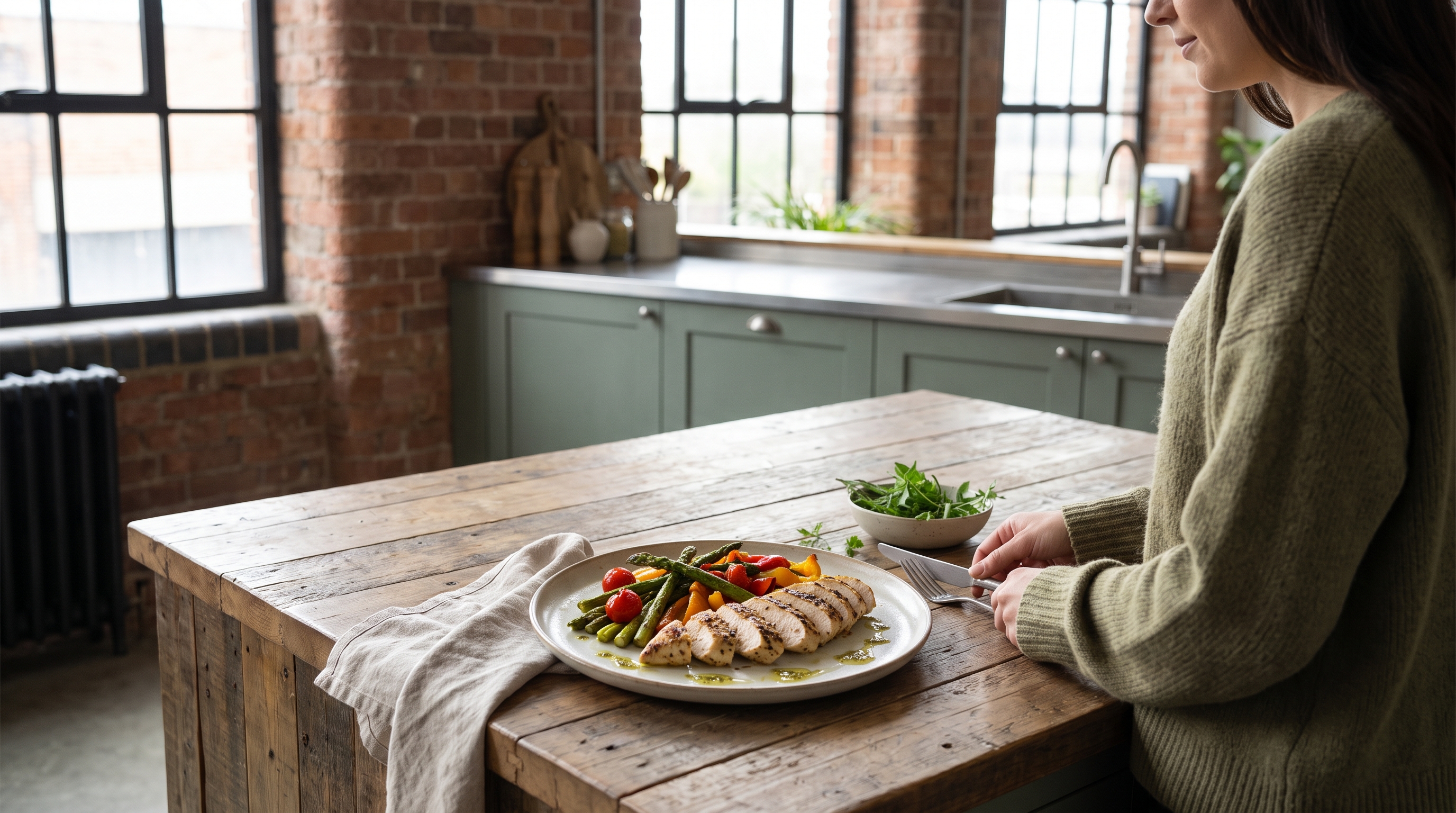
There's no single number that fits everyone, but a useful starting point is aiming for a palm-sized portion of protein at each main meal.
Building a Plate You Can Repeat
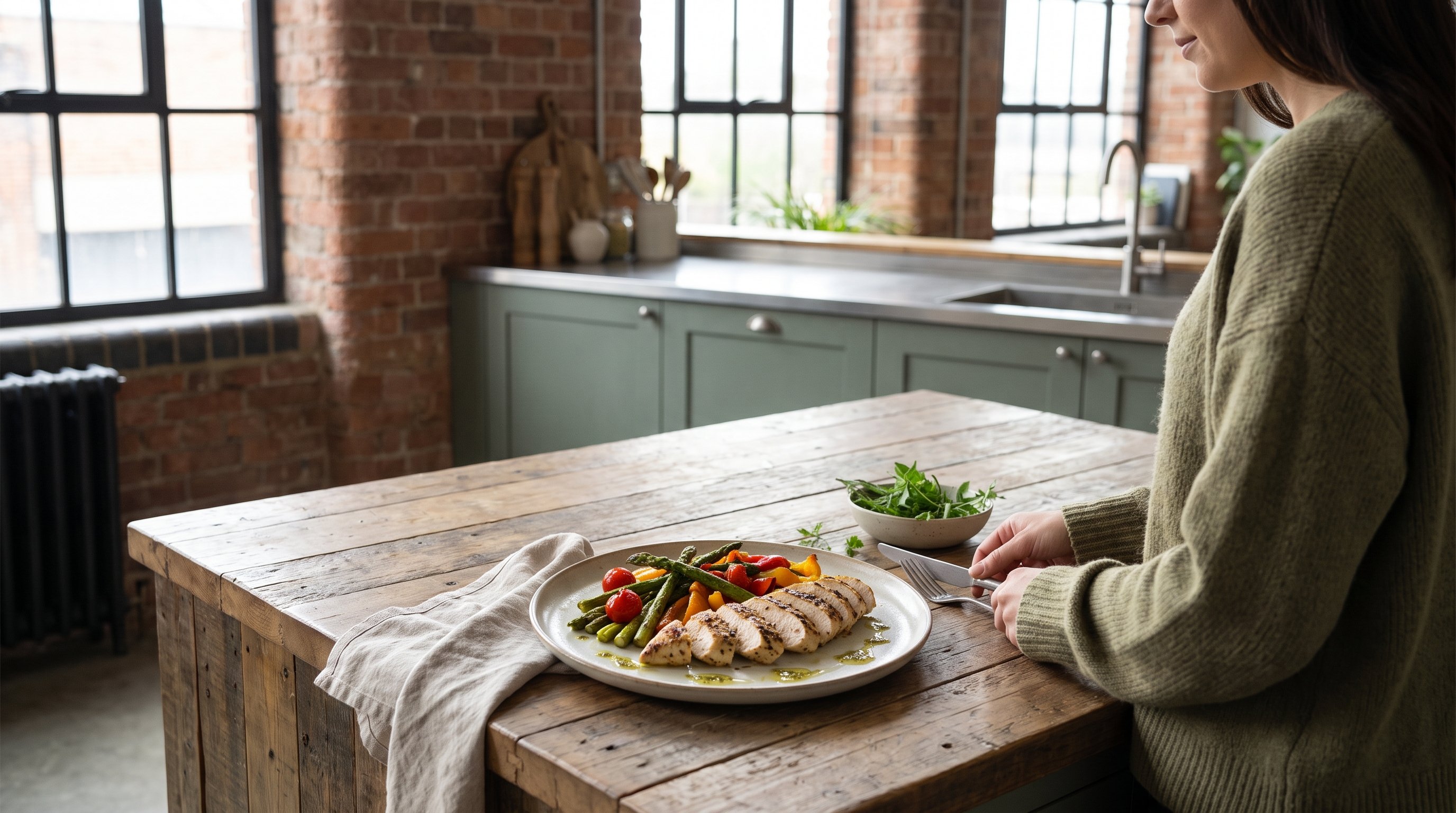
Pick one protein source, one vegetable-heavy side, and one slower carb, and you've got a template you can rebuild with different ingredients all week without having to think hard each time.

| Meal | Example | Approx Protein |
|---|---|---|
| Breakfast | Greek yoghurt with oats | 20g |
| Lunch | Grilled chicken, rice, veg | 35g |
| Dinner | Baked salmon, potatoes | 30g |
| Snack | Cottage cheese, fruit | 15g |
Add those four up and you're already past 90g across the day without any single meal feeling extreme, which is the point: steady, not dramatic.
Protein-Forward Eating vs Cutting Food Groups Out
Cutting out carbs entirely or slashing calories hard both rely on willpower holding up every single day, and willpower is a finite resource that runs low by evening.
Building your plate around protein doesn't ask you to say no to a food group. It asks you to structure the meal differently, which is a far smaller daily decision to keep making.
The adherence gap between the two is where most results actually come from. A plan you can keep doing for months beats a stricter plan you abandon after three weeks, every time.
Fitting Protein-Forward Eating Into a Normal Week
Real weeks involve takeaway nights, early meetings and leftovers eaten standing at the counter, so the plan has to survive contact with that.
Keeping two or three protein staples on hand - eggs, tinned fish, yoghurt, cooked chicken - means you can build a reasonable plate even on the days you didn't plan ahead.
This is where a tailored meal plan built around food you already like helps, because it removes the daily decision of what counts as "enough protein" and just shows you. GLP Diet does exactly that, turning the plate-building logic above into something you don't have to calculate yourself each morning.
No, Protein Does Not Target Fat in One Area
It would be convenient if eating more protein shrank one specific body part, but that's not how the body works.
Where you lose fat from is determined by your body, not by which meals you eat or which exercises you do, and no amount of protein changes that order.
What building your plate around protein actually does is support the deficit that drives change overall, by keeping you fuller on fewer calories across the whole day. That's a less exciting promise than spot reduction, but it's the honest one.
What Changes the Result With Protein-Forward Eating
Three things matter more than anything else once protein is on the plate.
The Levers Worth Focusing On
- Total protein across the day - one high-protein meal doesn't offset two low-protein ones, so spread it out.
- Consistency over weeks - the fullness effect compounds when it happens meal after meal, not just occasionally.
- Pairing protein with fibre - vegetables and whole grains alongside protein stretch fullness even further without adding much effort.
Common Mistakes With Protein-Forward Eating
Loading Protein Into One Meal Only
Eating a huge protein dinner but skipping it at breakfast leaves you hungry all morning. Spread portions across three meals instead of stacking it at one.
Forgetting the Rest of the Plate
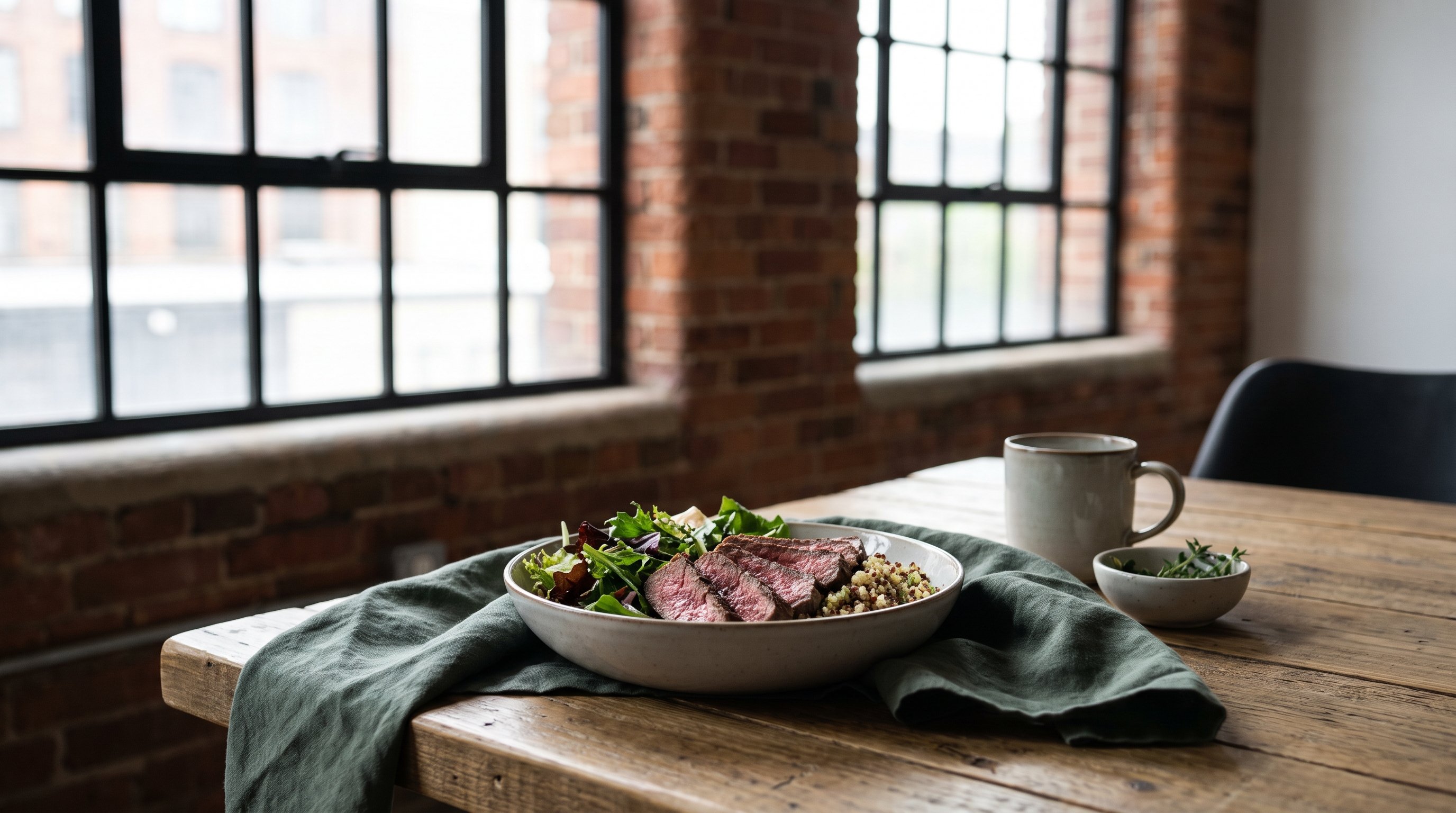
Protein alone doesn't make a meal complete. Pair it with vegetables and a slower carb so the fullness actually lasts.
Relying on Processed Protein Products
Protein bars and shakes can fill a gap, but a plate of whole food usually keeps you fuller for longer. Keep them as backup, not the main plan.
Guessing Portions Instead of Checking
A "palm-sized" portion looks different from person to person, and guessing low means you're under target without realising it. Check against the table above every so often until it becomes automatic.
Simplifying Protein-Forward Eating With GLP Diet
Knowing the theory of building meals around protein is one thing, constructing them on a Tuesday night with twenty minutes to spare is another.
GLP Diet handles that gap with a meal plan created just for you, so the protein-forward plate shows up on your screen already built instead of something you have to work out from scratch. Pair that with progress tracking that keeps steps, water and weight in one place, and the habit has fewer places to quietly slip.
Control Your Appetite
Smarter Weight Loss Plan
Making Protein-Forward Plates Your Default
The single most useful thing to do after reading this is to look at your next meal and ask whether there's a clear protein source on it. If not, that's the only change worth making today.
Everything else - the table, the mistakes, the arithmetic - is just detail around that one habit. GLP Diet is there to make that habit easier to repeat once you've decided to start.
FAQ
It helps indirectly by keeping you fuller on fewer calories, which makes a calorie deficit easier to hold. It's not a direct fat-loss mechanism on its own.
Cutting out a whole food group can work short-term but is harder to sustain, because it relies on daily willpower. Building meals around protein instead is a smaller, repeatable change.
Keeping a few quick staples on hand - eggs, tinned fish, yoghurt - covers most rushed days without extra planning. A tailored meal plan from GLP Diet can also take that decision off your plate entirely, literally.
This usually happens when protein gets loaded into one meal instead of spread across the day, leaving you hungry and reaching for convenience food later. Spreading protein evenly across meals tends to hold up better over time.
Share this post