Gentle Exercise: Why Low-Intensity Movement Fits into a Real Day
By:Author:GLP Diet Editorial
Updated on:October 17, 2026
- Does Low-Intensity Movement Actually Do Anything?
- Choosing Between Low-Intensity Training and High-Intensity Workouts
- Why the Easier Session Keeps Happening and Hard Ones Don't
- Adapting Light Movement to Where You Are Right Now
- Making Room for Light Movement in a Full Week
- No, Slow Movement Will Not Reshape One Body Part
- Tracking Light Movement Alongside Food With GLP Diet
- Building a Week That Keeps Moving
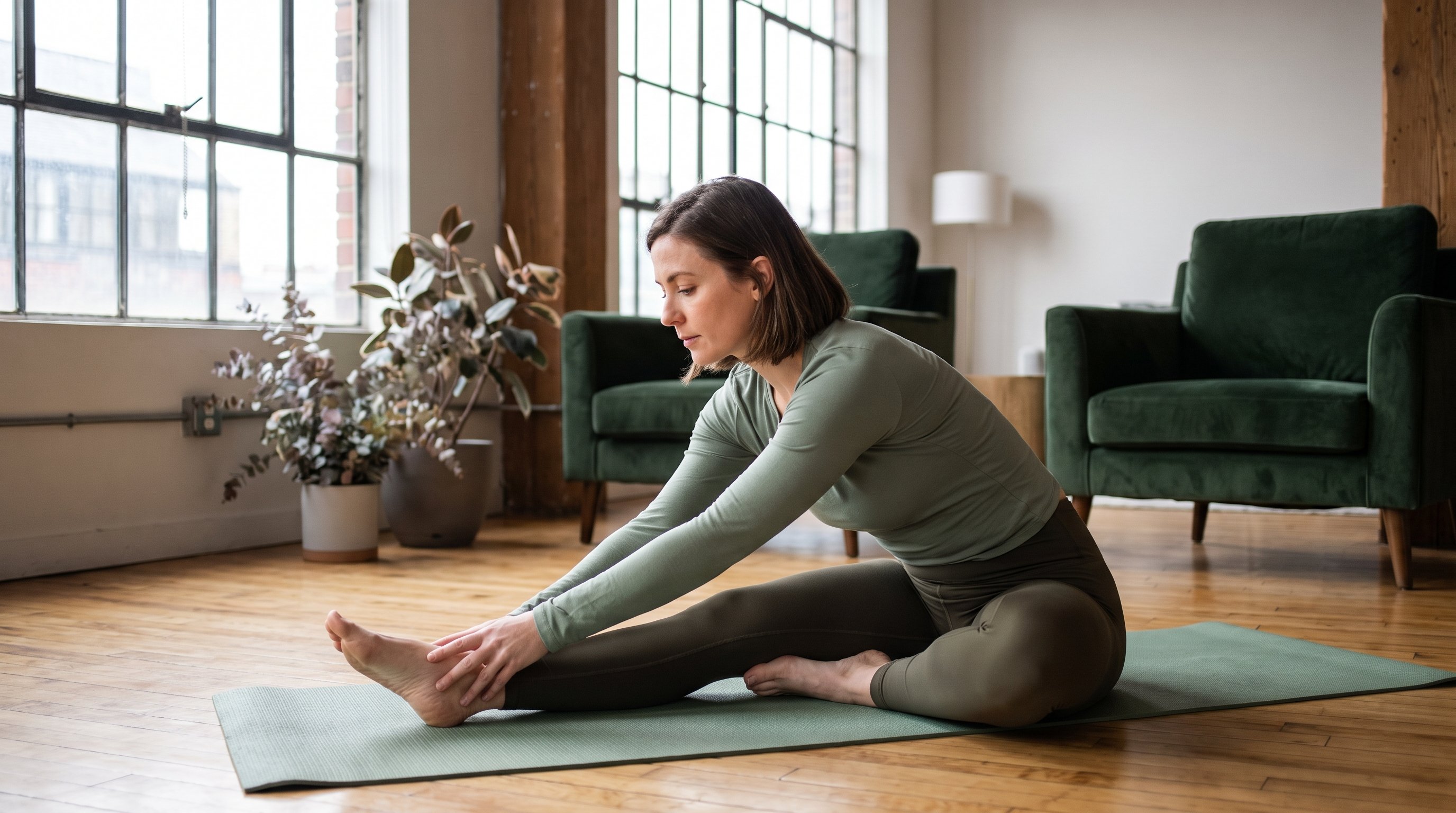
Low-intensity movement works because your body does not need to be pushed to its limit to benefit from moving more often. A short walk, some stretching, or a slow bodyweight circuit still asks your muscles to work and your joints to move through their range.
The mechanism is simple: consistent movement, even at an easy pace, adds up across a week in a way that one brutal session cannot match if it leaves you too sore to repeat it.
This article covers whether low-intensity training actually does anything, how it stacks up against harder workouts, who it suits, and how to build it into a week that is already full.
Does Low-Intensity Movement Actually Do Anything?
Movement at a low intensity still uses energy, still works muscles through a range of motion, and still gets your heart rate up a little above resting.
None of that needs maximum effort to count. A 20-minute session of light stretching or bodyweight moves adds a small amount of activity on top of whatever you did before it.
The Honest Arithmetic
If you do three 20-minute low-intensity sessions a week instead of zero, that is 60 minutes of movement you were not doing before. Over four weeks, that is 4 hours - a real, countable increase, even without a single hard interval.
The result is not dramatic by the numbers alone, but it is movement that actually happens, which is the part that matters most.
Choosing Between Low-Intensity Training and High-Intensity Workouts
The real decision most people face is not whether to exercise, it is whether to pick a demanding high-intensity programme or a slower, steadier approach.
Both can fit into a routine. The table below lays out the practical differences so you can see which one matches your actual week.
| Factor | Low Intensity | High Intensity |
|---|---|---|
| Recovery time needed | Minimal, most days | 1-2 days off |
| Risk of skipping next session | Lower | Higher |
| Equipment required | None or minimal | Often gym based |
| Joint impact | Low | Higher |
| Fits around a full workday | Easily | Needs planning |
Why the Easier Session Keeps Happening and Hard Ones Don't
A hard interval workout asks a lot of you in one go, and that is exactly why it is easy to skip when the day gets busy or your legs are still sore from last time.
A low-intensity session asks much less, which means there is less reason to put it off.

The session that actually gets repeated week after week beats the session that gets skipped two weeks out of three, even if the skipped one looks more impressive on paper.
Adherence is the real variable that decides whether any routine does anything at all over time.
Adapting Light Movement to Where You Are Right Now
If You Are Just Starting Out
Begin with short sessions, maybe 10 to 15 minutes, and let the habit form before you add time. There is no need to prove anything in the first week.
If Your Days Are Already Packed
Break movement into smaller pieces across the day rather than trying to carve out one long block. Ten minutes before work and ten after dinner still adds up.

If You Are Managing Joint Discomfort or Getting Older
Lower-impact movement lets you stay active without the jarring that harder training can involve, which matters more as joints need more care over time.
If You Are Returning After a Break
Start well below what you used to do rather than trying to pick up where you left off. Rebuilding a habit matters more than rebuilding fitness in the first few weeks.
Making Room for Light Movement in a Full Week
Most weeks are not short on hours, they are short on blocks of uninterrupted time, which is exactly why short sessions tend to survive longer than long ones.
Ten minutes in the morning, a short stretch break at lunch, or a slow walk after dinner can sit inside a day without needing to be scheduled like an appointment.
GLP Diet includes light exercise sessions built for exactly this kind of week, alongside step, water and weight trackers so you can see the small sessions add up without needing a gym calendar.
Keeping movement visible in one place tends to matter more than the intensity of any single session.
No, Slow Movement Will Not Reshape One Body Part
A common hope is that stretching or light toning work around the stomach, arms or thighs will shrink fat in that exact spot.
That is not how the body works. You cannot choose where fat is used from, regardless of which muscles you move.
What low-intensity movement does do is support overall activity and muscle tone across the whole body, which is a more honest and more achievable target than spot reduction ever was.
Tracking Light Movement Alongside Food With GLP Diet
Keeping movement going is easier when it sits next to the rest of your routine instead of living on its own separate list.
GLP Diet brings a tailored-for-you meal plan, light exercise sessions, and progress tracking for steps, water, weight and fasting into one place, so you are not juggling several apps to see the full picture.
The nutrition and lifestyle guides and the hand-picked challenges inside the app are built to support the kind of steady, repeatable routine that low-intensity movement already relies on.
Control Your Appetite
Smarter Weight Loss Plan
Building a Week That Keeps Moving
Pick one short session you can realistically repeat three times this week, and do that before thinking about anything more demanding.
GLP Diet can help you keep that session visible alongside your meals and daily habits, so the small, steady work does not get lost in a busy schedule.
FAQ
It adds extra activity on top of your baseline, which supports the overall calorie balance that weight management depends on. It will not do the job alone, but it is a real and repeatable contribution.
Easy is the point, because a session you actually repeat beats a hard one you skip. Three short sessions a week, kept up for months, outweigh one intense session done twice before it gets dropped.
Ten minutes split into two five-minute blocks still counts, and it fits around most schedules without needing a dedicated slot. The goal is consistency, not length.
Motivation fades when sessions feel like a chore or when progress is not visible day to day. Keeping movement, food and water logged together, such as inside GLP Diet, gives you a clearer picture of the small changes that are easy to miss otherwise.
Share this post