Leg Workout at Home: How to Fit an Effective Routine Into a Real Day
By:Author:GLP Diet Editorial
Updated on:October 17, 2026
- Can a Bodyweight Leg Routine Really Build Strength?
- Home Leg Workout or Gym Leg Day: Which Fits You
- Why Skipping the Gym Step Keeps Leg Training Going
- Adjusting a Leg Routine for Your Actual Situation
- Making Room for Leg Day in a Packed Week
- No, Squats Will Not Slim Down Just Your Thighs
- Pairing Your Leg Workout With GLP Diet's Daily Tools
- Turning a Few Squats a Day Into a Real Habit
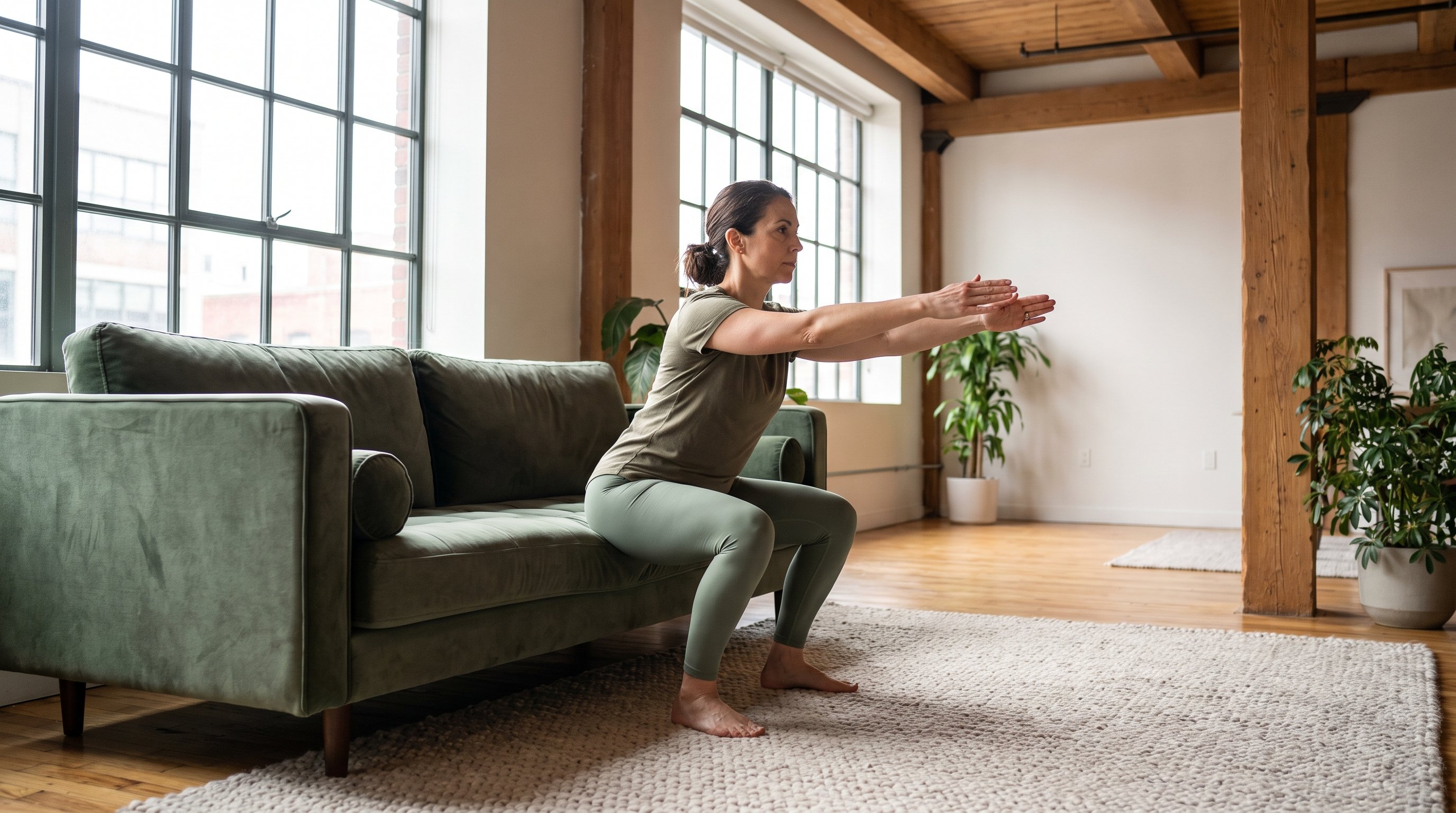
A leg workout at home works because your leg muscles respond to resistance, and your bodyweight plus gravity gives you plenty of that without any equipment.
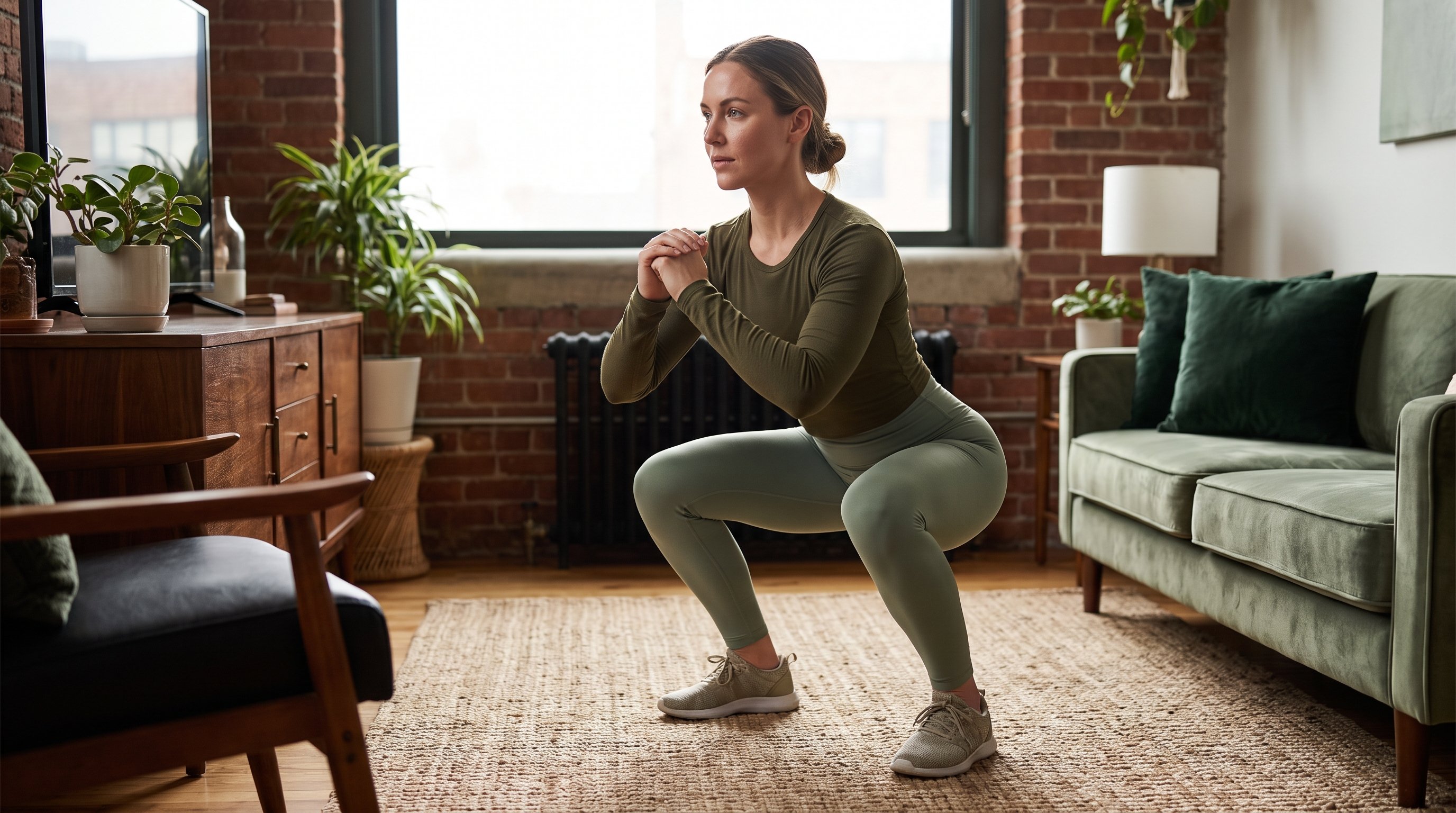
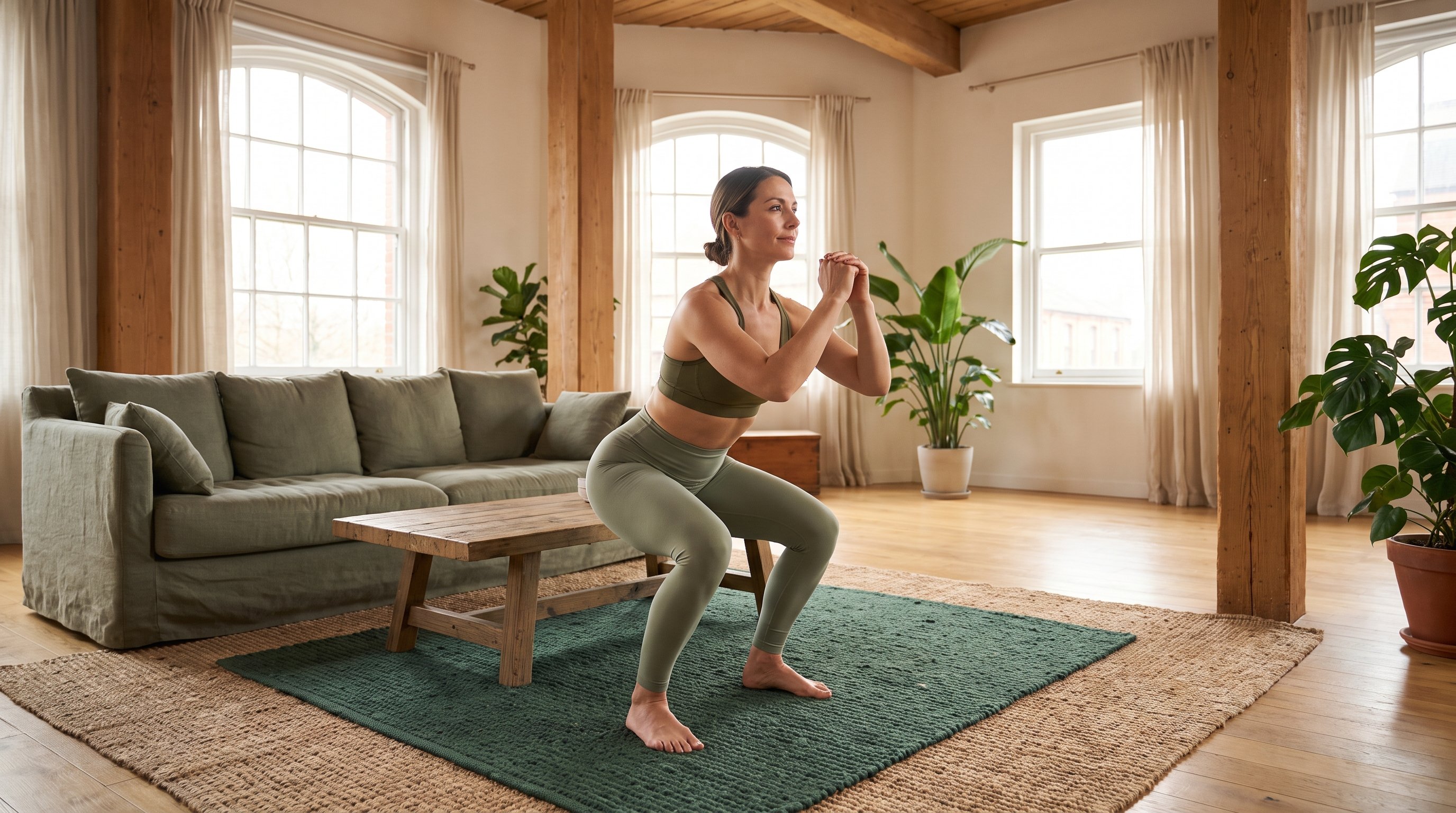
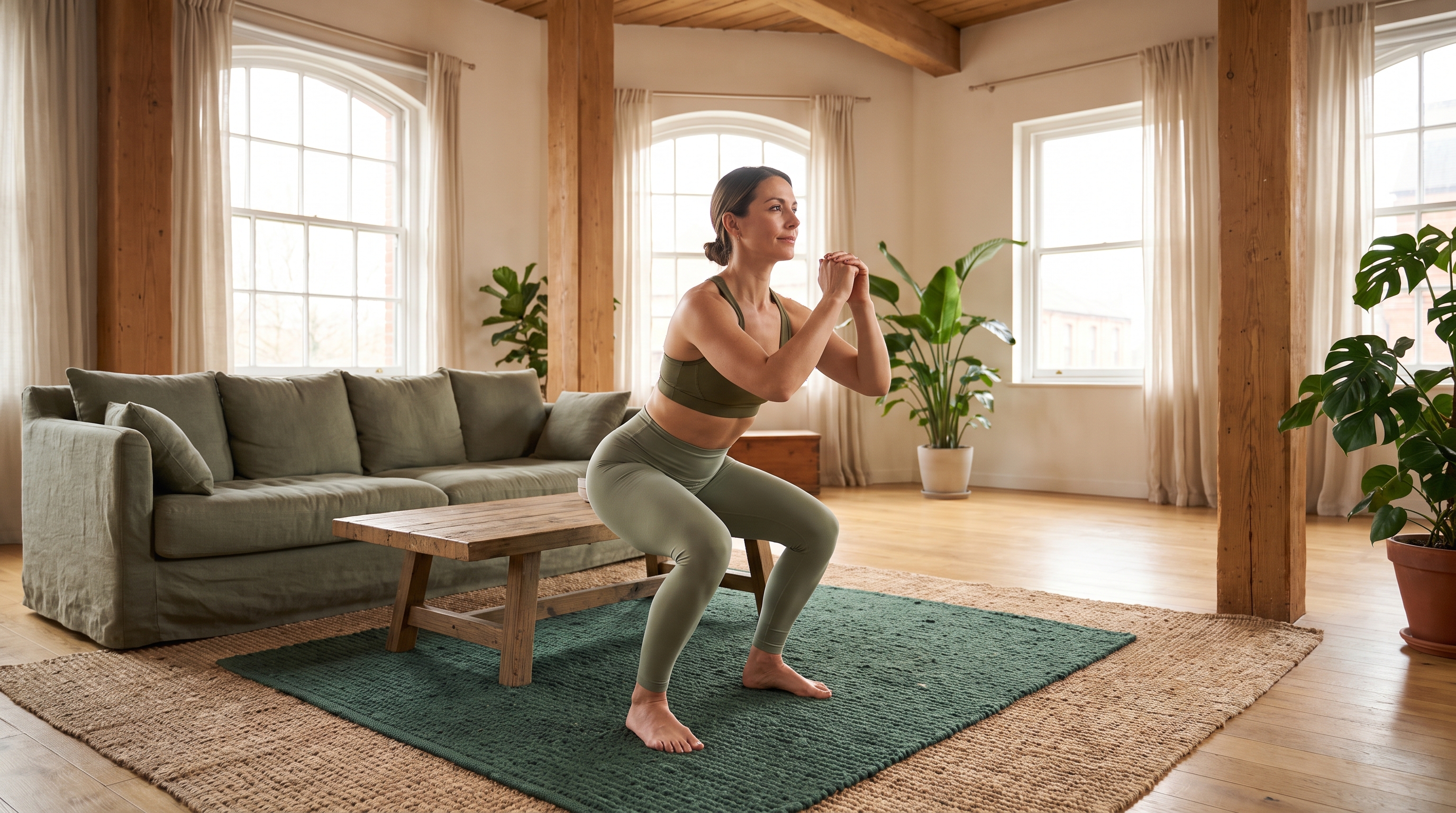
Squats, lunges, step-ups and bridges load the same muscle groups a gym machine would, just using your own body weight and a few household objects as resistance instead of a stack of plates.
This guide covers whether home leg training actually holds up, how it compares to a gym leg day, who should adjust it, and how to keep it part of a normal week instead of a one-off burst of effort.
Can a Bodyweight Leg Routine Really Build Strength?
Muscles get stronger when they're asked to work harder than they're used to, not when they're lifted by a specific machine.
A bodyweight squat moves roughly your full body weight through a range of motion, which for most people is already a meaningful load on the quads, glutes and hamstrings.
The Arithmetic Behind It
If someone weighs 70kg and does three sets of 15 squats, that's 45 reps of moving 70kg through a squat pattern, which adds up over a week of sessions.
Add a static lunge hold or slow the tempo down and the same bodyweight becomes harder to manage, which is how home training keeps getting more challenging without needing extra kit.
None of this means a home routine replaces heavy barbell work for someone chasing maximum strength numbers, but for general leg strength, mobility and muscle tone, the mechanism is the same: consistent resistance over time.
Home Leg Workout or Gym Leg Day: Which Fits You
The real decision isn't which routine burns more, it's which one you'll actually do often enough to matter.
Here's how the two options stack up across the things that actually decide whether a routine sticks.
| Factor | Home Leg Workout | Gym Leg Day |
|---|---|---|
| Time to start | Zero travel | Commute both ways |
| Equipment needed | None required | Machines and weights |
| Cost | No membership | Monthly fee |
| Flexibility | Any time of day | Fixed opening hours |
| Progression method | Reps, tempo, angles | Added weight plates |
Neither option is wrong, but the one with fewer barriers between you and the first rep is usually the one that survives a busy month.
Why Skipping the Gym Step Keeps Leg Training Going
A gym leg day only works if it actually happens, and travel time, parking and opening hours are all extra chances for a session to get cancelled.
A home leg workout removes most of those steps, so the gap between deciding to train and actually training drops to almost nothing.
Fewer steps between intention and action is the whole case for adherence: a routine done consistently at a moderate effort beats a harder one that keeps getting skipped.
That doesn't make home training automatically easier in the moment, a set of jump lunges can still leave your legs shaking, but it does make it easier to start, and starting is most of the battle.
Adjusting a Leg Routine for Your Actual Situation
If You're Just Starting Out
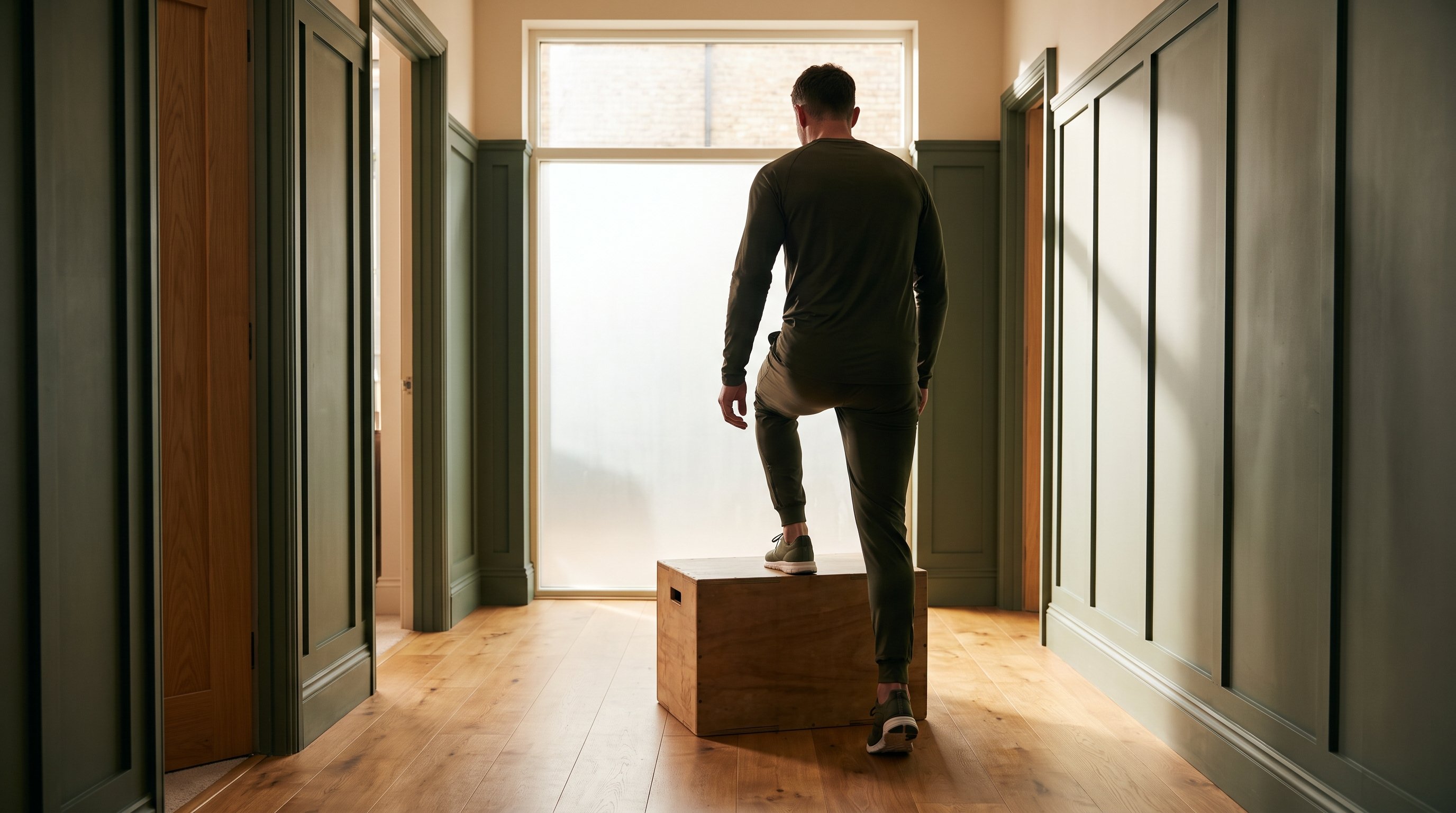
Stick to bodyweight squats, glute bridges and step-ups using a low step or stair, done at a pace where you can still hold a conversation.
If Your Day Is Already Full
Ten minutes of squats, lunges and calf raises done in trainers while dinner cooks still counts, there's no rule that a leg workout needs a dedicated hour.
If You're Managing Joint Sensitivity
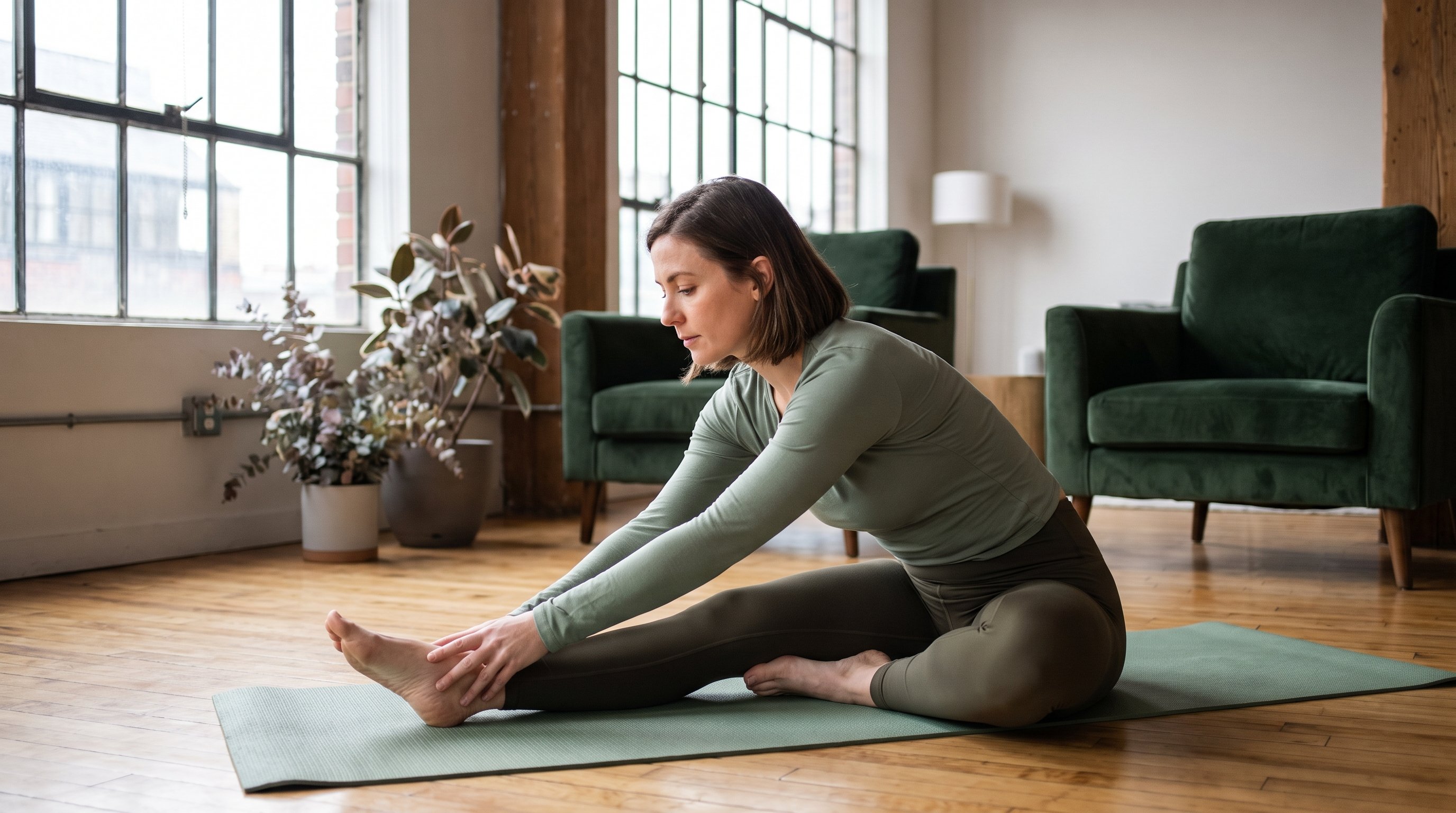
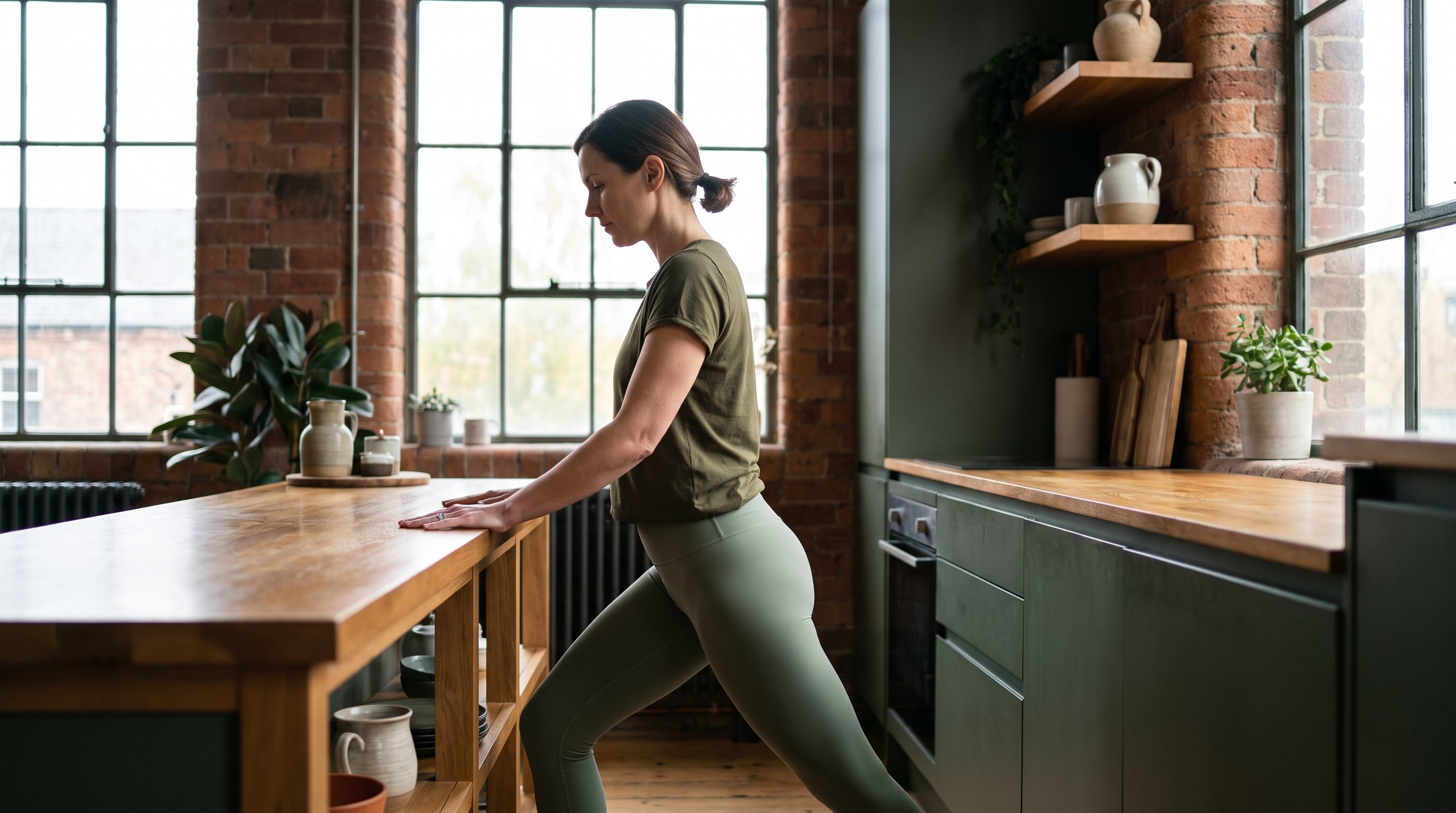
Swap jumping movements for slow, controlled squats and lunges, and use a wall or counter for balance so the focus stays on the muscle, not the joint.
If You're Coming Back After a Break
Drop the reps and sets back down for the first week or two and let soreness guide how quickly you add volume back in, rather than returning at a previous peak straight away.
Making Room for Leg Day in a Packed Week
The hardest part of any home routine isn't the exercises, it's remembering to actually open the session and get started.
Keeping your leg sessions logged alongside the rest of your routine, instead of in a separate notebook or app, makes it far easier to notice patterns like which days you skip most often.
A light exercise library that includes low-impact, guided sessions means you can drop into a spare ten or fifteen minutes, so the routine fits around your day instead of the other way round.
Pairing that with progress tracking means your step count, water intake and weight all sit in one place, so a leg session doesn't feel like one more disconnected task on top of everything else.
No, Squats Will Not Slim Down Just Your Thighs
This is the promise most people secretly want from a leg workout: do enough lunges and the fat on your thighs disappears first.
It doesn't work that way, the body doesn't choose where it loses fat from based on which muscle you just trained, that decision is made by genetics and overall patterns, not by targeted reps.
What a leg workout actually does is build strength and muscle tone in the legs themselves, and support the kind of overall activity and energy balance that affects your whole body over time.
So the honest answer is: train your legs because strong legs are useful and because the movement itself counts toward your week, not because you're expecting fat to vanish from one specific spot.
Pairing Your Leg Workout With GLP Diet's Daily Tools
A leg workout alone is one piece of a much bigger picture, what you eat and how consistent your week looks matter just as much as the reps themselves.
GLP Diet builds a meal plan around food you already like, so the eating side of things doesn't feel like a separate fight on top of a new leg routine.
It also includes lifestyle challenges and nutrition guides written to support the kind of steady habit-building that a home workout routine depends on, rather than leaving you to figure it all out alone.
If you're trying to support weight loss drugs or just want your workouts, meals and tracking in one place instead of scattered across apps, that's exactly where GLP Diet fits in.
Control Your Appetite
Smarter Weight Loss Plan
Turning a Few Squats a Day Into a Real Habit
Pick one leg movement you can do today, a set of squats by the kettle, a few lunges before a shower, and do it without waiting for the perfect ten-minute block of free time.
Consistency is unglamorous and it wins anyway, which is why small, repeatable sessions tracked alongside the rest of your routine tend to outlast ambitious plans that never get scheduled in the first place.
FAQ
For general strength, tone and mobility, yes, bodyweight resistance works through the same mechanism as gym equipment. For maximum strength gains with heavy added load, a gym offers options a living room can't match.
It's only as easy as you let it be, slowing the tempo, adding pauses or increasing reps all make the same movements harder. Most people underestimate how challenging three sets of slow, controlled squats actually feel.
A hallway, a kitchen floor or the end of a bed is enough space for squats, lunges and bridges. The routine doesn't need a dedicated room, just enough space to move your arms and legs freely.
Motivation fades once the routine stops feeling new, which is normal rather than a sign anything's gone wrong. Logging sessions in GLP Diet alongside meals and steps helps keep the habit visible instead of letting it quietly disappear.
Share this post