Morning Stretches: How to Make a Short Daily Routine Stick
By:Author:GLP Diet Editorial
Updated on:October 17, 2026
- Building a Morning Stretch Sequence Step by Step
- How Many Minutes of Morning Stretching Actually Helps
- Making Morning Stretches Work Around a Busy Week
- A Four-Day Plan for Starting Morning Stretches
- What Happens to a Stretch Habit After the First Few Weeks
- Common Mistakes That Derail a Morning Stretch Routine
- Pairing Morning Stretches With GLP Diet's Daily Tools
- Keeping a Short Stretch Habit Past the First Month
Morning stretches work when they're short, specific and attached to something you already do - not when they're an extra task competing for willpower you don't have yet.
Stretching loosens tight muscles and nudges joints through their full range of motion after hours of being still, which is why movement often feels easier once you've done it.
This guide covers the steps, how much is actually enough, where the routine tends to fall apart, and a simple four-day plan to get it started.
Building a Morning Stretch Sequence Step by Step
A workable sequence doesn't need planning every night. Follow the same order each morning and it becomes automatic within a couple of weeks.
A Simple Sequence to Follow
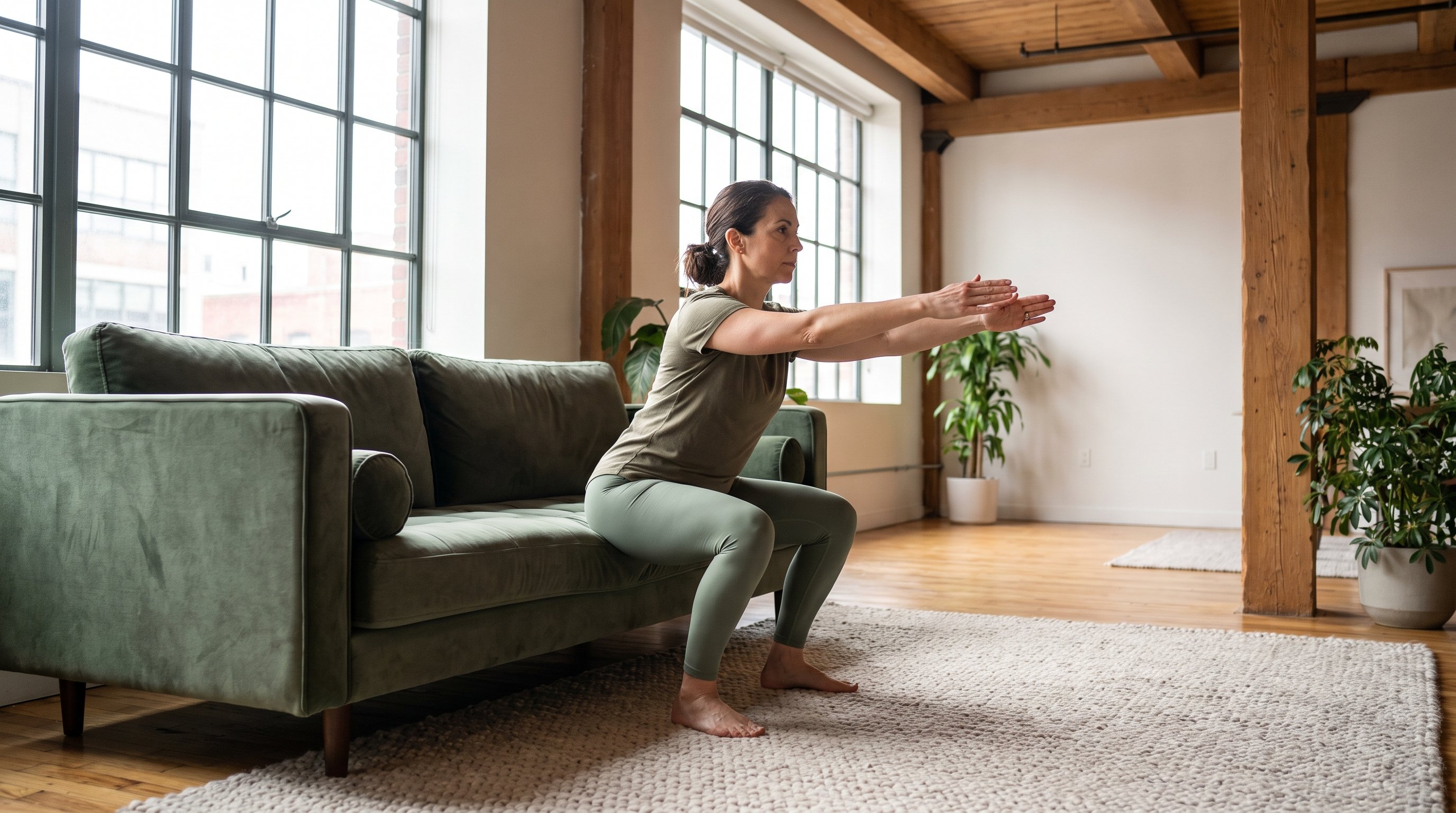
- Start seated or lying down - roll the neck gently side to side for a few slow breaths before standing up.
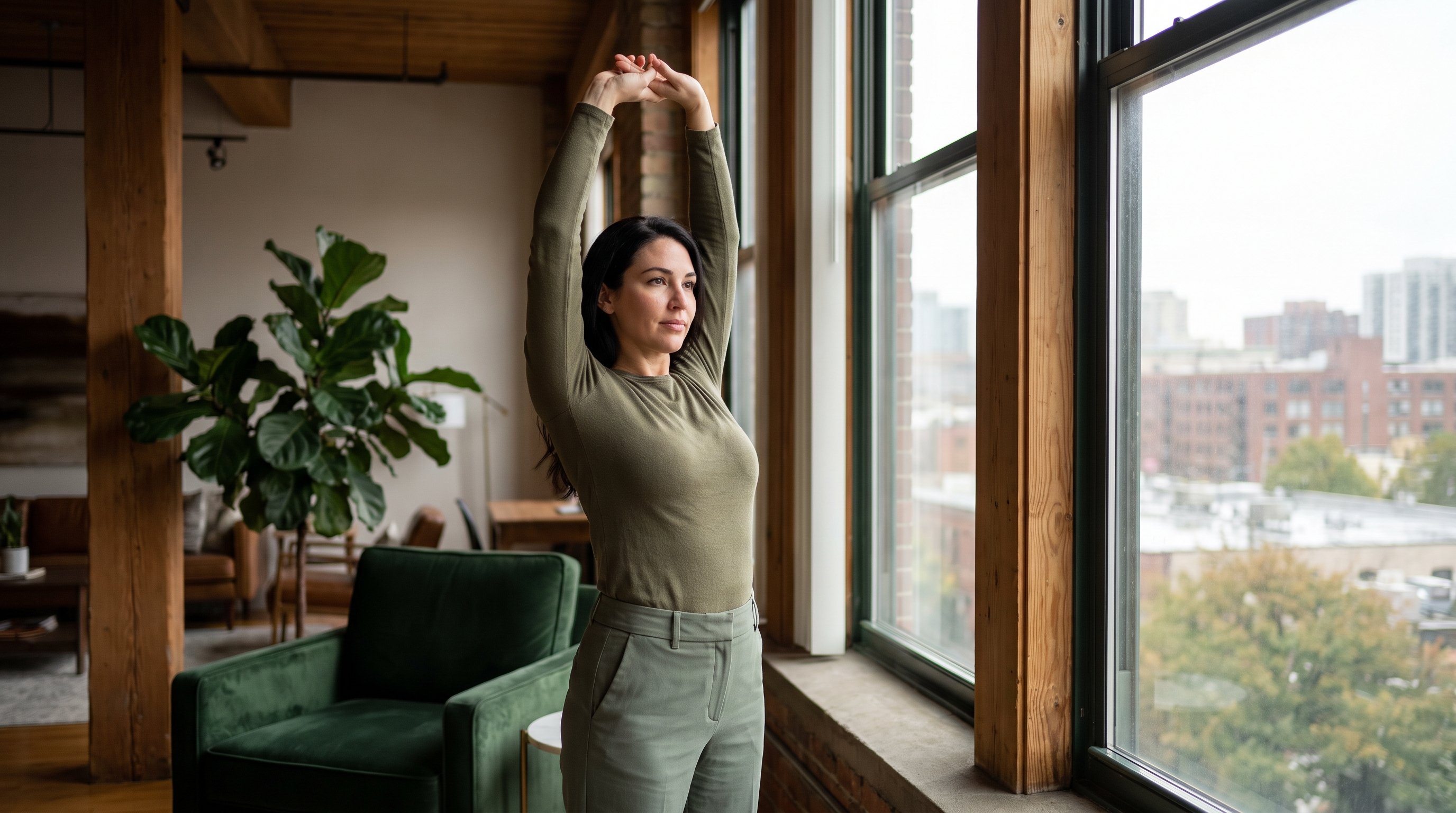
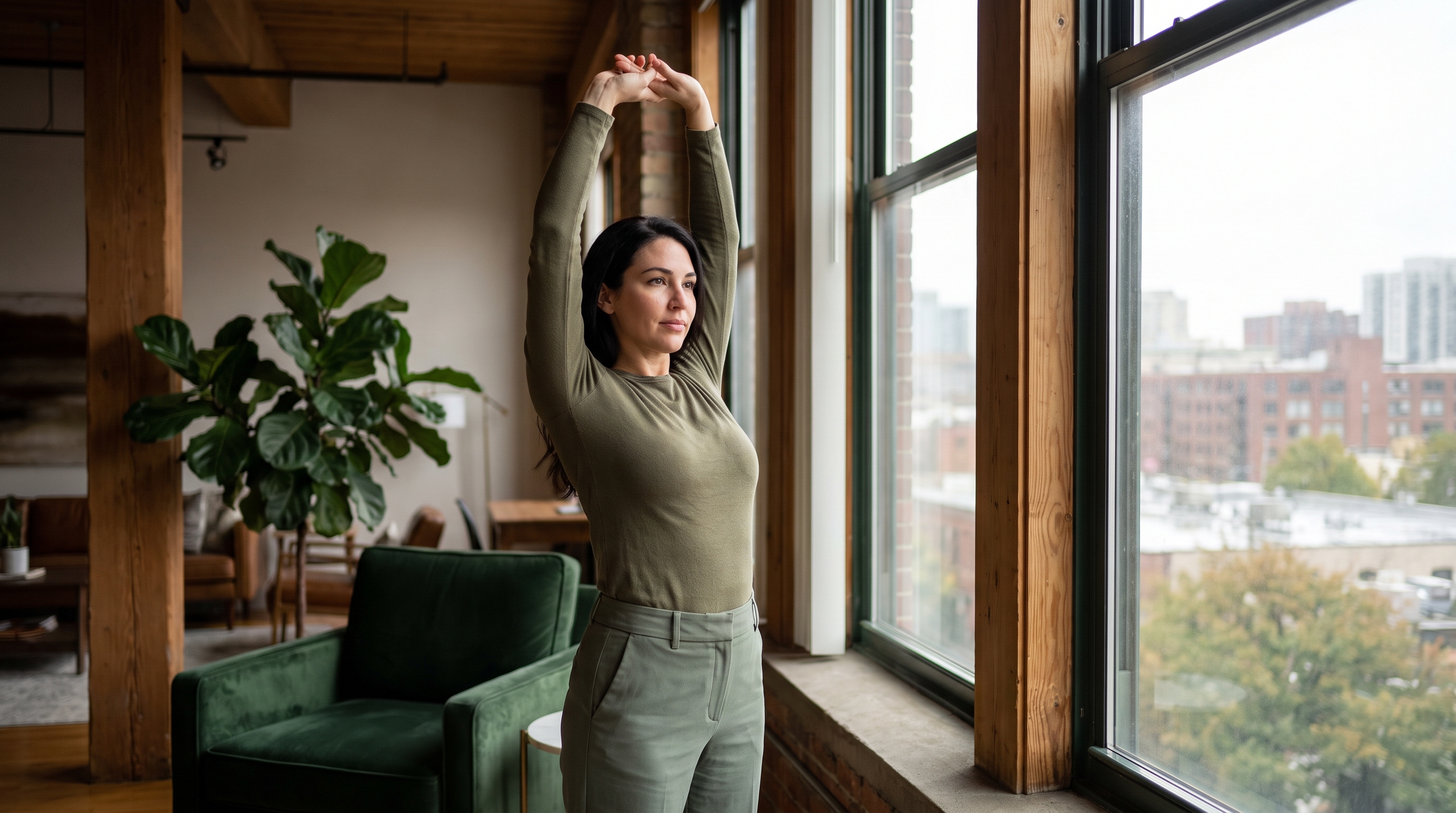
- Reach both arms overhead - stretch tall for a few seconds, then let them drop and shake out.
- Stretch the sides - reach one arm overhead and lean gently to the opposite side, then switch.
- Roll the shoulders - a handful of slow circles backward, then forward, to loosen the upper back.
- Fold forward at the hips - let the head and arms hang, knees soft, for a few breaths.
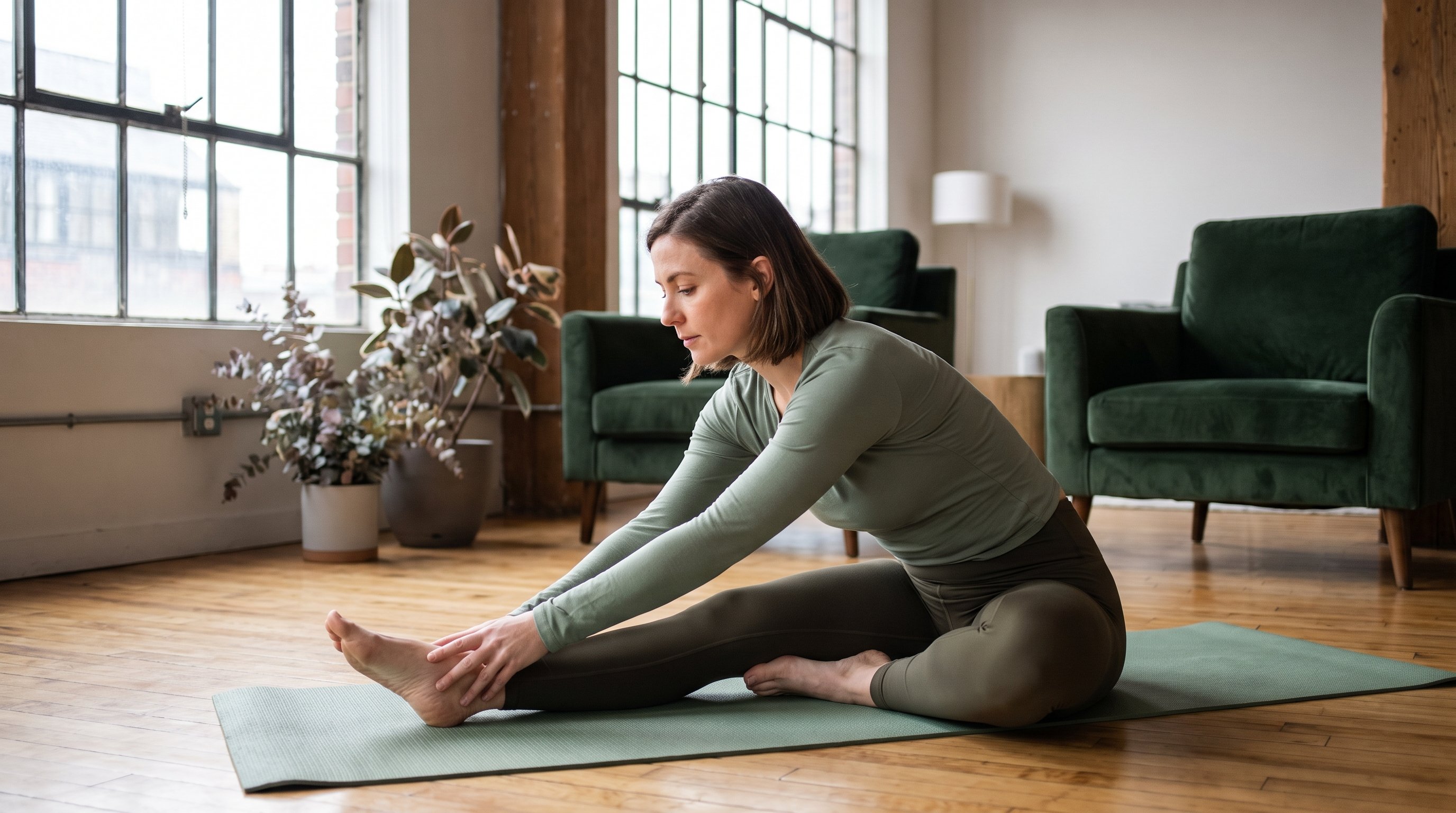
- Stretch the hips and legs - a gentle lunge on each side, or a seated hamstring reach.
- Finish with a few deep breaths - standing tall, shoulders relaxed, before starting the day.
None of these need special equipment or a mat, which is part of why the sequence is easy to repeat daily.
How Many Minutes of Morning Stretching Actually Helps
Finding a Duration You'll Actually Repeat
A short routine done daily beats a long one done occasionally, simply because consistency is what builds the habit in the first place.
Five to ten minutes is enough to move through the full sequence without rushing, and it's short enough to fit before coffee, before the school run, or before checking a phone.
| Goal | Duration | Focus Area |
|---|---|---|
| Quick reset | 3-5 minutes | Neck, shoulders, spine |
| Standard routine | 5-10 minutes | Full body sequence |
| Stiff mornings | 10-15 minutes | Hips, hamstrings, lower back |
| Desk-heavy days ahead | 5 minutes | Shoulders, chest, neck |
Making Morning Stretches Work Around a Busy Week
The routine that survives a packed week is the one that doesn't need a special outfit, a clear floor or extra time carved out before everyone else is up.
Doing it beside the bed, in pyjamas, before checking any screen removes most of the friction that makes people skip it.
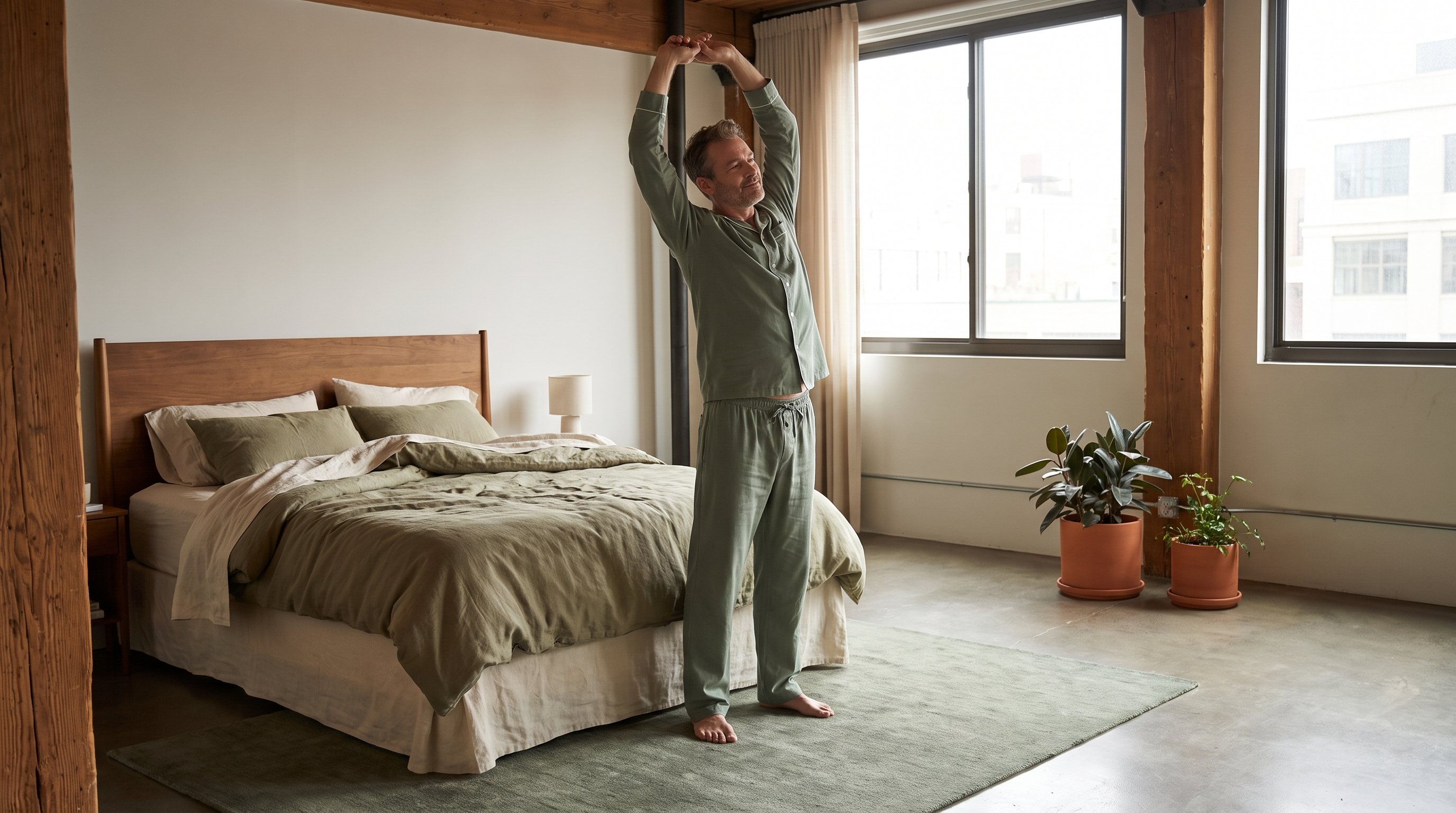
GLP Diet's light exercises sit in the same spirit - low-impact, guided sessions you can slot into a morning without needing a gym bag or a free hour.
Pairing a short stretch sequence with a tracked habit, like logging water or steps straight after, can make the whole morning feel like one routine instead of several separate chores.
A Four-Day Plan for Starting Morning Stretches
Starting small and building the sequence over four days makes it easier to stick with than trying the full routine from day one.
| Stage | What to Add |
|---|---|
| Day 1 | Neck and shoulder rolls only |
| Day 2 | Add overhead and side reaches |
| Day 3 | Add forward fold and hip stretch |
| Day 4 | Full sequence, five to ten minutes |
By day four the whole sequence should feel familiar enough to do without thinking about the order.
What Happens to a Stretch Habit After the First Few Weeks
The first week usually feels fine because novelty does the work for you. The drop-off tends to show up once mornings get busier or the weather changes the routine.
Stiffness easing and mornings feeling less rushed are the early signs worth noticing, even if they're subtle at first.
Keep expectations loose on timing rather than chasing a specific result by a specific date - the habit matters more than the speed it takes hold.
Common Mistakes That Derail a Morning Stretch Routine
Treating It As a Workout, Not a Warm-Up
Pushing into deep stretches first thing can feel uncomfortable on a cold body. Ease in gently and let the range of motion build over the sequence, not in the first thirty seconds.
Skipping It the Moment the Schedule Tightens
The first thing to go in a busy week is usually the thing with no fixed time slot. Attach the stretch sequence to something fixed, like right after getting out of bed, so it has an anchor.
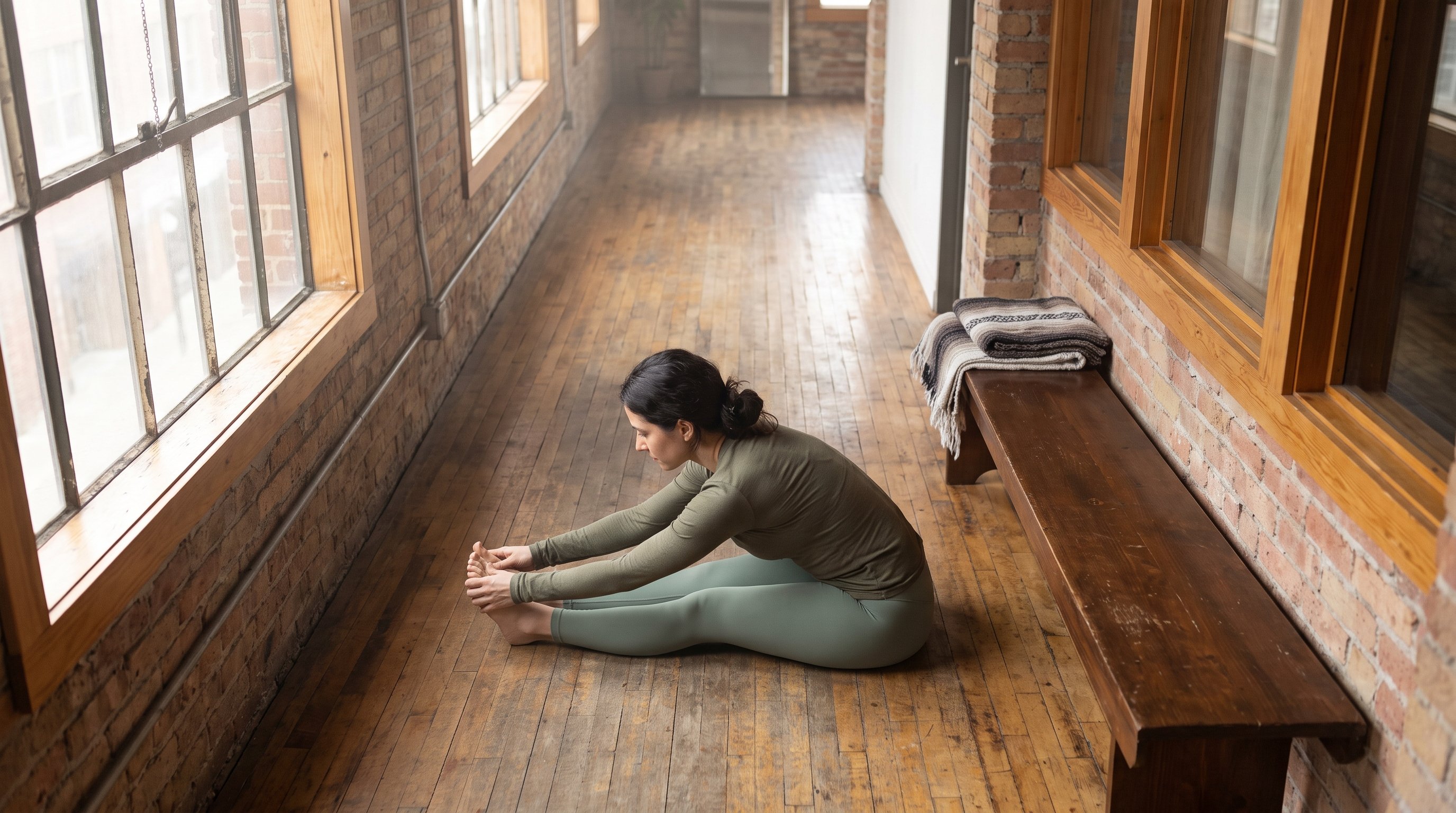
Chasing a Longer Routine Too Soon
Jumping from five minutes to twenty often backfires because it turns a quick habit into a scheduling problem. Build duration gradually, the way the four-day plan does.
Expecting It to Replace Other Movement
Stretching loosens muscles and joints, but it isn't a substitute for walking, strength work or cardio. Treat it as the opener to the day, not the whole day's activity.
Forgetting to Breathe Through It
Holding your breath during a stretch keeps muscles guarded and tense. Slow, steady breathing helps the body actually ease into the position instead of fighting it.
Pairing Morning Stretches With GLP Diet's Daily Tools
A stretch sequence is one small habit, but it tends to work better when it's part of a morning that already has some structure to it.
GLP Diet brings light exercises, progress trackers and a tailored meal plan into one place, so the stretch routine can sit alongside logging water or checking in on weight rather than being one more thing to remember separately.
The challenges feature can also turn a stretch habit into something with a bit more structure, which helps on the mornings motivation alone isn't enough.
Control Your Appetite
Smarter Weight Loss Plan
Keeping a Short Stretch Habit Past the First Month
The simplest way to keep a morning stretch routine alive is to keep it small enough that skipping it feels like more effort than doing it.
Pick the same five or six minutes, the same order, the same spot by the bed, and let it become background rather than a decision each morning. GLP Diet can help hold the rest of the morning routine together while that habit settles in.
FAQ
Stretching loosens muscles and joints rather than burning much energy on its own, so it isn't a weight-loss tool by itself. It's more useful as the thing that makes the rest of the day's movement, like walking or a workout, feel more comfortable to start.
Gentle stretching first thing in the morning is generally fine since the sequence itself acts as the warm-up, starting slow and easing in. Save deeper or more intense stretches for after the body has moved a little, rather than the very first motion of the day.
A shortened version, even just neck rolls and an overhead reach for a minute, keeps the habit alive better than skipping it entirely. Consistency on the small version matters more than holding out for a day with a full ten minutes free.
No, stretching loosens the body but doesn't build strength or significantly raise your heart rate, so it works best as a start to the day rather than the whole of it. GLP Diet's light exercises are a good next step once the stretch sequence feels automatic and you want a bit more movement.
Share this post