Walking for Weight Loss: How Much You Need to See Steady Results
By:Author:GLP Diet Editorial
Updated on:October 17, 2026

- Does Walking Actually Shift the Numbers on the Scale?
- Walking vs Running: Which One Should You Actually Pick
- Why Walking Beats a Punishing Cardio Schedule
- Who Walking Works Best for and How to Adjust It
- Making Daily Walks Fit Around a Full Week
- The Myth That Walking Targets One Area of the Body
- Making Walking Count With GLP Diet's Tools
- Turning a Daily Walk Into Something You Keep Doing
Walking for weight loss works best when you treat it as a daily habit rather than a one-off workout, aiming for a consistent amount most days rather than one long session now and then.
The mechanism is simple: walking burns energy, and energy burned beyond what you eat adds up to a deficit over time. It won't out-pace a large surplus of food, but stacked daily it becomes a meaningful part of the maths.
This article covers whether walking actually moves the needle, how it stacks up against other cardio, who it suits, and how to fit it around a packed week without it turning into a chore.
Does Walking Actually Shift the Numbers on the Scale?
Walking burns calories through plain movement - the heart works a bit harder, muscles contract, and the body uses stored energy to fuel it. That energy use is small per minute compared to running, but it's sustainable for far longer, which is where it earns its keep.
A rough estimate: a 30-minute walk might use somewhere in the range of 100 to 200 calories, depending on pace and body size. Do that most days of the week and the weekly total starts to add up to a noticeable slice of a weekly deficit.
Walking alone won't override a diet that's well above maintenance - no amount of steps fixes that gap on its own. But paired with eating that roughly matches your needs, the extra calories burned each day make the deficit easier to hold without feeling restrictive.
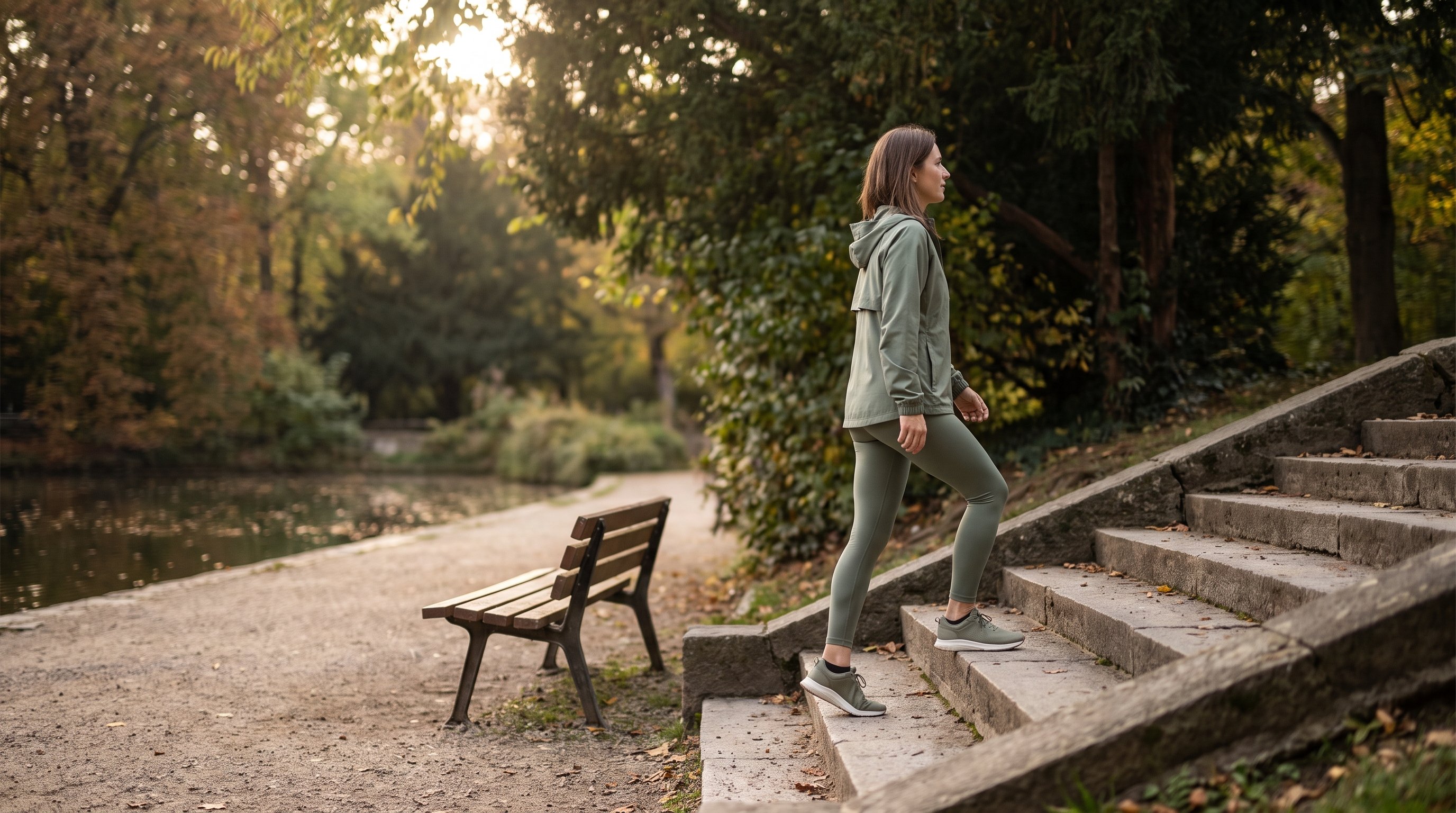
The honest arithmetic is this: consistency beats intensity. Ten short walks across ten days will usually beat one long walk followed by nine days of nothing, simply because the total minutes of movement add up higher.
Walking vs Running: Which One Should You Actually Pick
Walking and running both create a calorie deficit when paired with sensible eating, but they ask very different things of your body and your schedule.
The table below lays out the practical differences side by side, so you can see where each one actually fits a real week.
| Factor | Walking | Running |
|---|---|---|
| Calories per session | Lower per minute | Higher per minute |
| Joint impact | Low impact | Higher impact |
| Recovery needed | Minimal | More rest days |
| Learning curve | None | Takes conditioning |
| Daily sustainability | Easy most days | Harder most days |
Neither option is wrong. The decision usually comes down to which one you'll actually keep doing when the week gets busy or your motivation dips.
Why Walking Beats a Punishing Cardio Schedule
A tough interval session or a strict daily run plan looks impressive on paper, but it only counts if it keeps happening week after week.
Walking has an edge because almost nothing stops you from doing it - no special kit, no recovery days needed, no risk of burnout from pushing too hard too soon.
Adherence is the whole game with weight management. A moderate habit you repeat for months will usually beat an intense one you quit after three weeks, purely because the total volume over time ends up higher.
That's not an argument against harder training - it's an argument for starting with something you can actually sustain, then adding intensity later if you want to.
Who Walking Works Best for and How to Adjust It
If You're Just Starting Out
Begin with short, flat walks and let the duration grow naturally rather than forcing a big number from day one. The goal early on is building the habit, not hitting a target distance.
If Your Week Is Already Full
Break walking into smaller chunks - a walk to get coffee, a lap around the block on a call, a walk after dinner. Three ten-minute walks add up to the same total time as one thirty-minute block.
If You're Managing Joint Discomfort
Walking is already one of the gentler options, but flatter routes and supportive shoes make it easier still. Shorter, more frequent walks can work better than one long outing if your joints need a lighter touch.
If You're Returning After a Long Break
Treat the first couple of weeks as a reintroduction, not a comeback. Slow, steady walks rebuild the habit without the soreness that can make people quit in week two.
Making Daily Walks Fit Around a Full Week
The walks that stick are the ones attached to something you already do - the commute, the school run, the dog, the morning coffee run.

Keeping track of steps alongside water and weight in one place makes it easier to notice patterns, like which days you naturally walk more and which days need a nudge.
GLP Diet's progress tracker covers step counts alongside water intake and weight, so a walking habit sits next to the rest of your routine instead of living in a separate app you forget to open.
The Myth That Walking Targets One Area of the Body
A common hope is that walking will shrink a specific area - the stomach, the thighs, wherever feels most frustrating. That's not how the body works.
Fat loss happens across the whole body based on genetics and overall energy balance, not based on which muscles did the work. Walking doesn't get to choose where the result shows up, and no exercise does.
The real answer is less exciting but more useful: keep the habit consistent, keep the deficit sensible, and let the body do what it does in its own time and its own order.
Making Walking Count With GLP Diet's Tools
Walking does its job best when it's paired with eating that matches your actual needs, which is where a lot of people lose momentum without realizing it.
GLP Diet builds a tailored GLP-1 diet meal plan around food you already like, so the eating side of the equation doesn't fight against the walking you're putting in. The app also includes light exercise sessions for days when a walk isn't enough on its own, plus guides on nutrition and lifestyle habits written to support the same goal.
For anyone managing a weight loss medication, GLP Diet is built to work alongside that approach rather than against it, keeping meals, movement and tracking in one place instead of scattered across several tools.

Control Your Appetite
Smarter Weight Loss Plan
Turning a Daily Walk Into Something You Keep Doing
The walking that actually changes anything is the walking you keep doing in month three, not the ambitious plan you wrote on day one.
Pick one small anchor - a walk after lunch, a walk before dinner - and let GLP Diet help track it alongside meals and water so the full picture stays in one place.
FAQ
There's no single number that works for everyone, but a daily habit of 30 minutes or more most days adds up to a meaningful weekly total. What matters more than hitting an exact figure is doing it consistently.
Walking burns less per minute than harder cardio, but because it's easy to sustain daily, the weekly total often ends up comparable to shorter, harder sessions done less often. The habit that keeps happening tends to beat the one that gets skipped.
Splitting walking into several short chunks across the day - a commute, an errand, a call taken on foot - adds up to the same total minutes as one long walk. The body doesn't need the walk to be continuous to count it.
Motivation dips once the novelty wears off, which is normal and not a sign of failure. Tracking steps alongside meals and water in GLP Diet can help spot the slump early, so it's easier to course-correct before the habit disappears entirely.
Share this post